A Meal Prepared at Home
The story of homemade food begins before a platter reaches the camera: with a familiar kitchen, time set aside, and the hope that someone will enjoy what comes out of the pan.
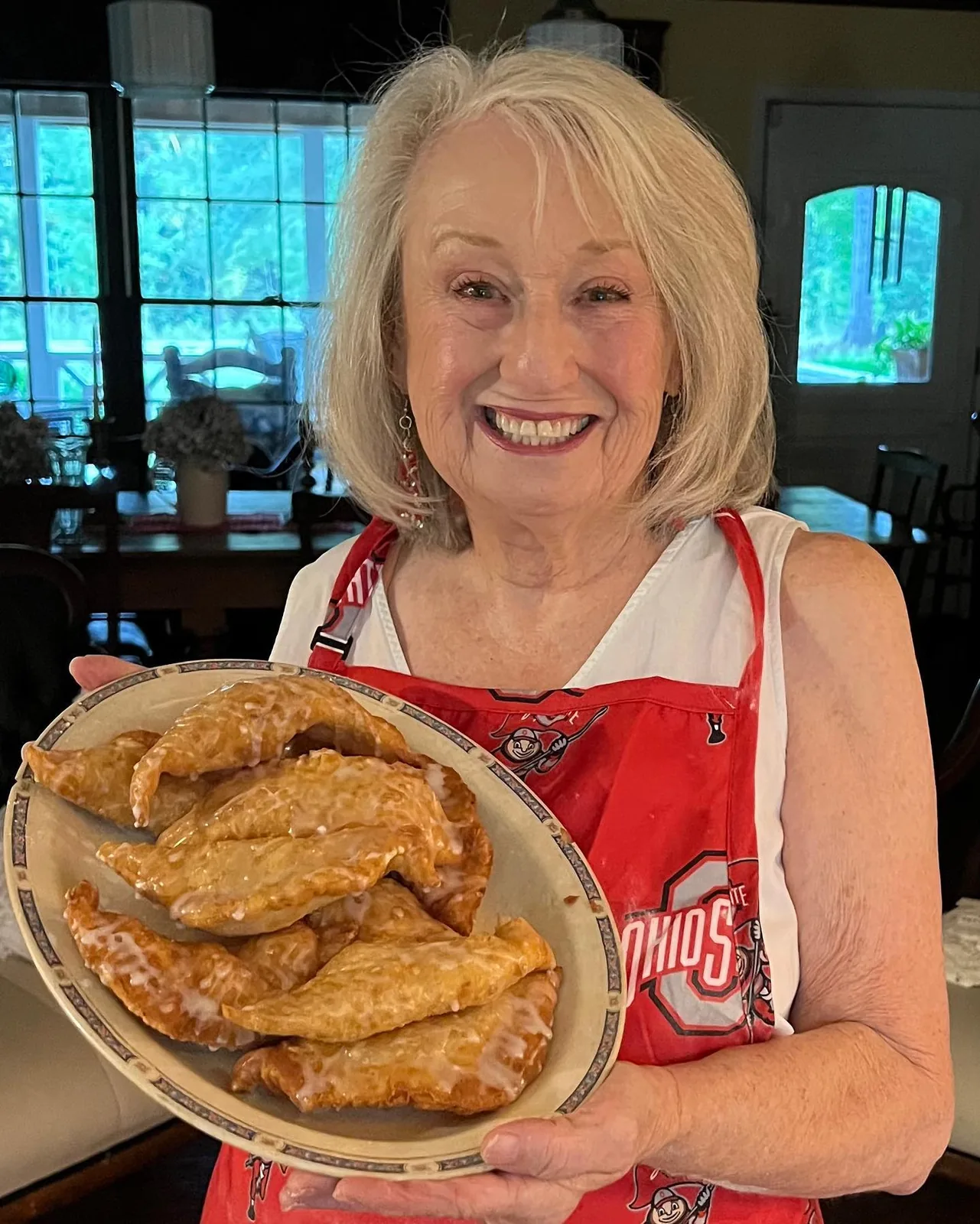
The platter is an invitation
The opening photograph begins at the satisfying end of the process. Brenda holds a large platter of golden hand pies close to the camera. Their crimped edges, irregular shapes, and trails of glaze make them visibly homemade. Nothing about the plate suggests a single serving; this is food prepared in quantity and meant to travel from one pair of hands to many others.
A finished platter tells only part of the story, but it gives the reader a reason to stay. We want to know what filled the pastries, how the crust became crisp, and who might receive the first one. Good food photography creates appetite while leaving enough unanswered to pull us toward the kitchen.
The kitchen is where the story gains weight
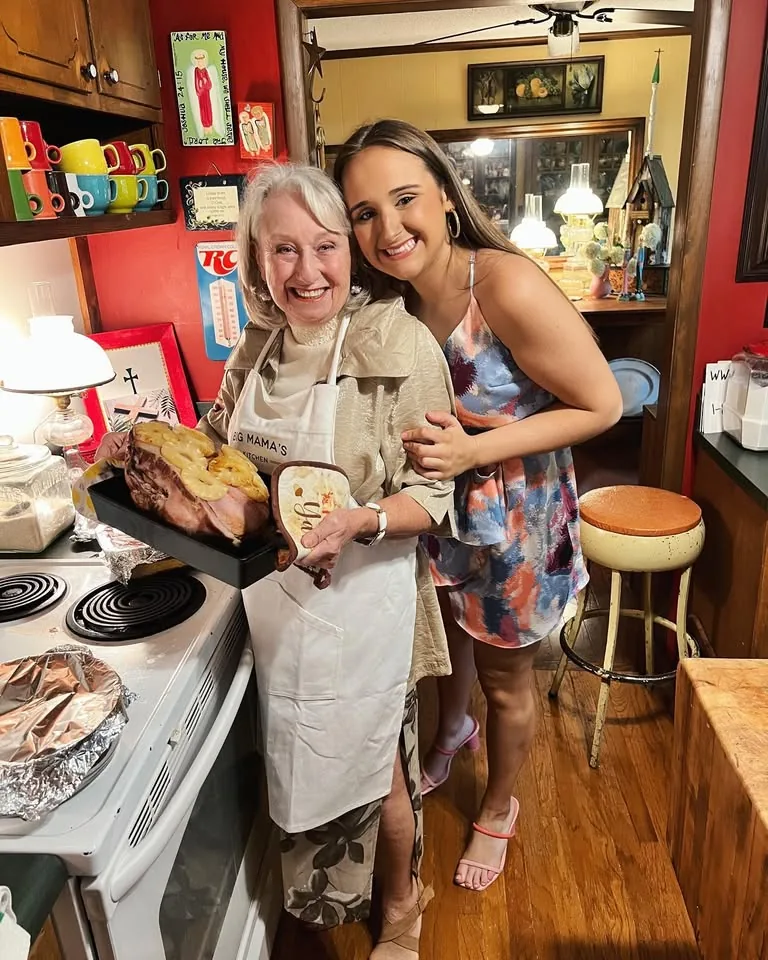
The next frame widens from one platter to the room around it. Brenda stands at the stove holding a roasted ham crowned with pineapple, while a younger woman leans close beside her. Colorful cups, canisters, stools, lamps, and covered pans fill the compact kitchen. The space looks used, personal, and ready for more than one dish.
That visual abundance is important. Home cooking rarely happens on an empty studio counter. It unfolds among the tools and objects of daily life. A pan waits under foil, another dish occupies the stove, and the cook has to find room for the centerpiece. The photograph turns logistical work into a memory shared by two people.
Preparation and celebration overlap
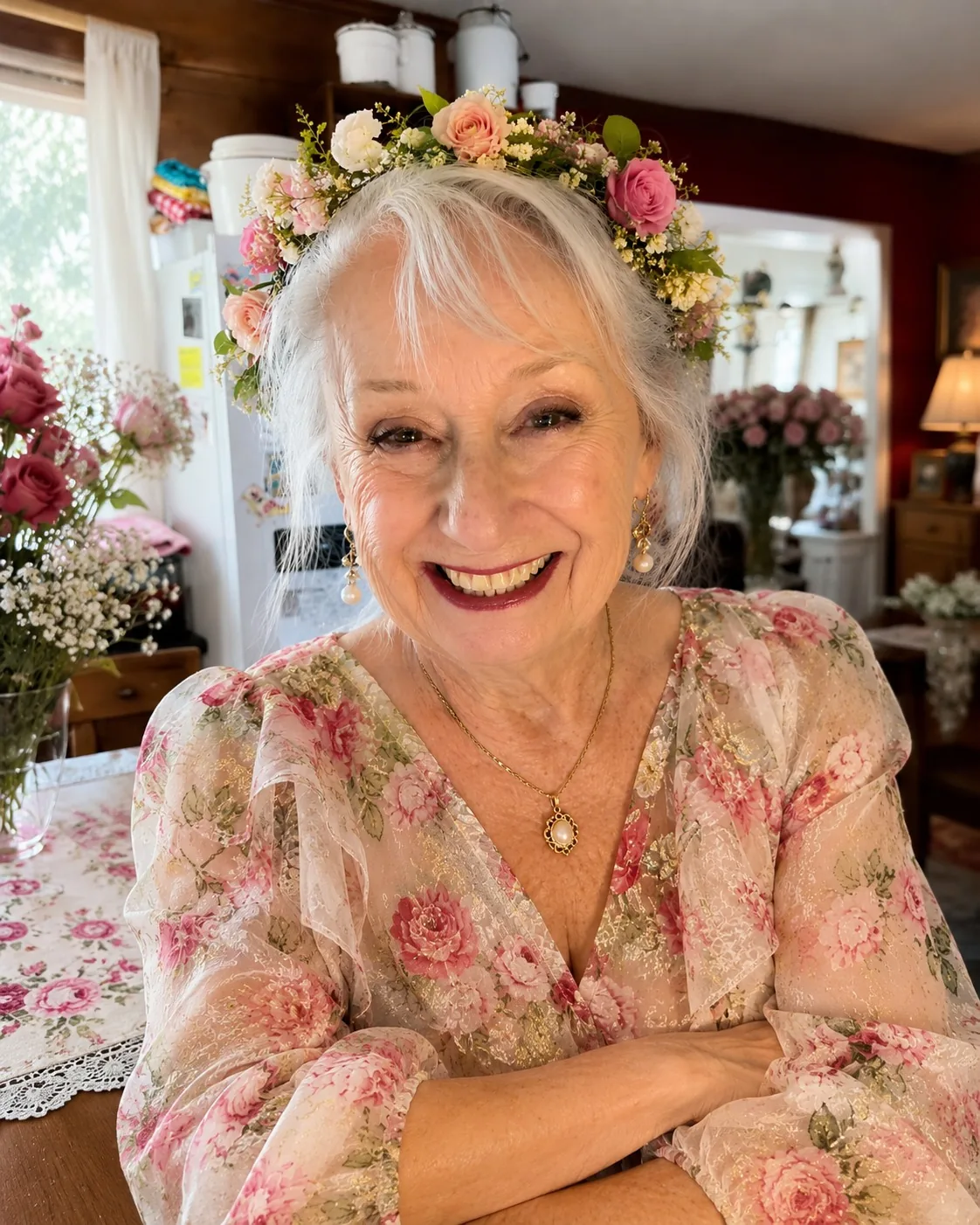
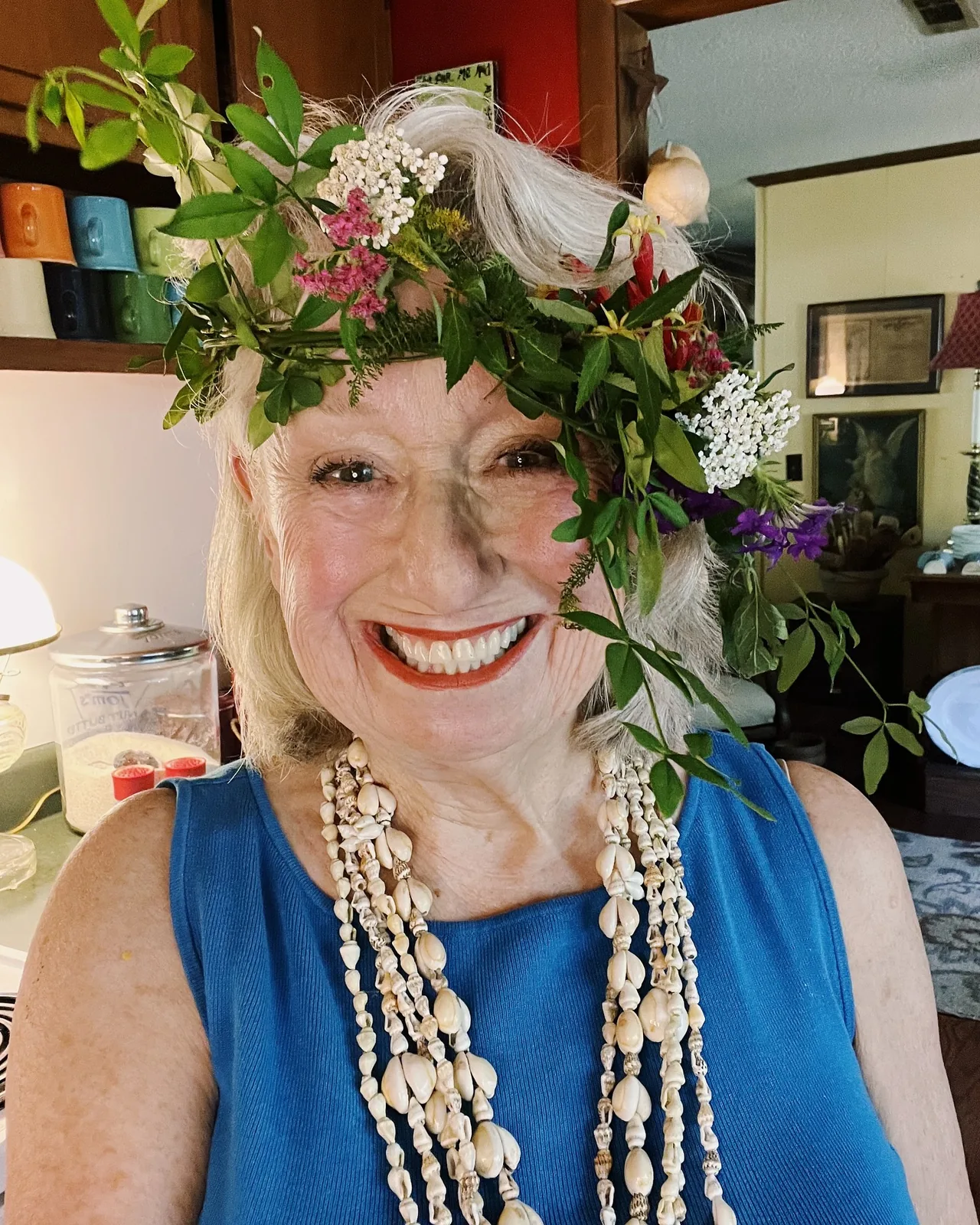
The final portraits do not show a recipe in progress, yet they complete the story of a meal at home. In one, pink flowers repeat across the dress, crown, tablecloth, and bouquets. In the other, a looser wreath of leaves and blossoms frames a broad smile in the kitchen. The details suggest that preparing food can sit beside celebration rather than remain invisible behind it.
Hosts often move between practical and festive roles. One moment involves checking the oven or finding another serving spoon; the next involves sitting down, accepting a flower crown, and becoming part of the occasion. These photographs keep both sides visible.
Why homemade food feels personal
A home-cooked dish carries evidence of decisions. The cook chooses how dark the crust should become, how generously to glaze it, and whether the platter needs one more piece. Those choices are small, but together they make the food recognizable as someone’s work.
That is also why imperfect uniformity can be appealing. The hand pies do not look machine stamped. Their individual folds and browned edges show repetition by hand. A roast placed in a dark pan beside a home stove feels more approachable than a highly styled advertisement. Readers can imagine making something similar in their own kitchens.
Build a calmer meal before guests arrive
The photographs offer practical inspiration as well as atmosphere. Choose at least one dish that can be completed early, such as a pie, chilled dessert, or salad. Prepare serving plates before the food is ready. Clear a landing place near the stove and decide which dishes need the oven last. These simple choices leave the cook more available when people arrive.
Not every course must be elaborate. One centerpiece dish can carry the meal while vegetables, bread, or a make-ahead dessert support it. Generosity is measured less by the number of recipes than by whether everyone feels considered and the cook can sit down too.
The story ends with sharing
Seen in sequence, the four images now move with purpose: a platter offers the result, the stove reveals shared work, and the flower portraits allow celebration into the kitchen. They show that a meal prepared at home is not only food made in a private place. It is a way to turn effort, personality, and ordinary rooms into welcome.