Friends, Community and the People Around the Table
A table can begin with one cook, but it becomes a gathering place only when other people pull up their chairs. The strongest food traditions are carried by a circle wider than any single household.
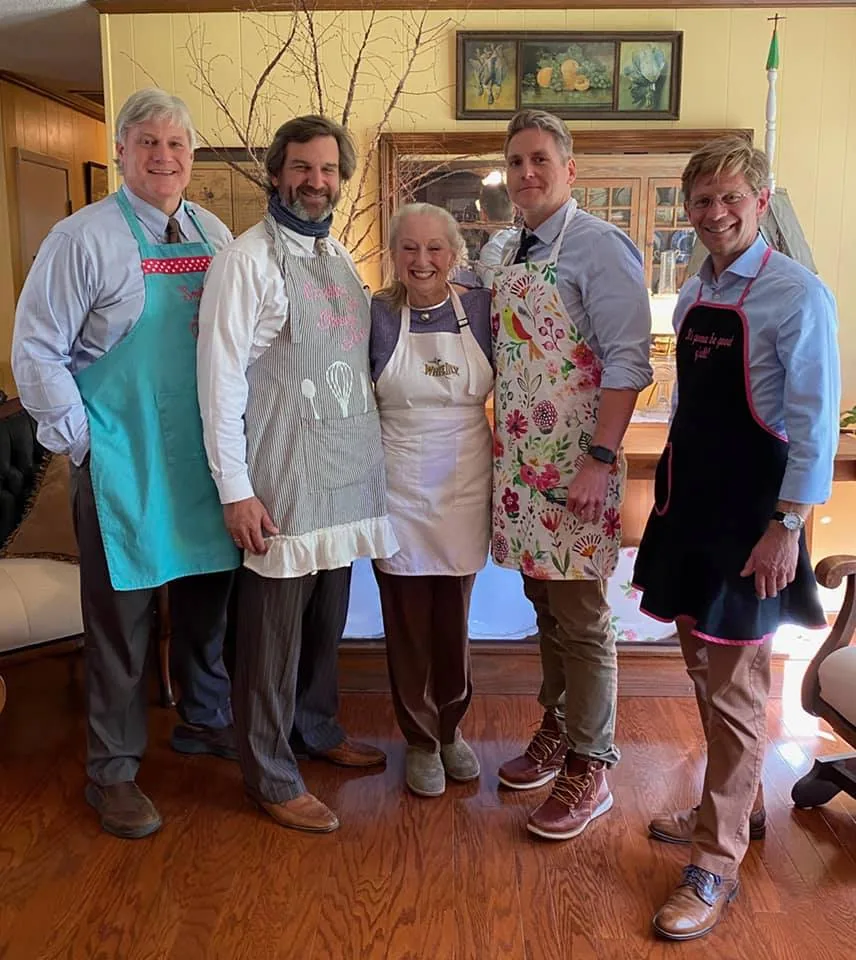
Five aprons and one cheerful kitchen
The first photograph immediately feels like a team portrait. Brenda stands at the center of four men, and every person is wearing an apron with its own color and personality. Dress shirts, rolled sleeves and cooking clothes meet in the same frame. Behind them is a real home interior—wooden floors, familiar furniture and the soft visual busyness that appears when a room is being used rather than staged.
The aprons tell us enough to begin the story. Whatever brought this group together, they were not dressed merely to watch. They were prepared to take part. Someone may have measured, stirred, carried, tasted or cleaned as the cooking moved along. The photograph preserves the enjoyable point at which the work can pause and everyone can stand close enough to say, “We did this together.”
Community often grows exactly this way. Not through a perfect speech or elaborate plan, but through useful work shared among people. One person knows how the recipe should look. Another keeps the conversation lively. Someone notices the sink filling up and begins washing. A fourth person asks the question everyone else was too proud to ask. By the time the food reaches the table, the group has made more than a meal.
A kitchen makes introductions easier
Meeting new people can feel formal when everyone is simply standing in a room. Give the group a bowl to pass, vegetables to prepare or biscuits to cut, and the atmosphere changes. Hands have something to do. Conversation can begin with the task at hand and gradually move toward family, work, old stories and the places everyone calls home.
This is one reason cooking together creates such lasting memories. The experience has a natural rhythm. There are instructions to follow, mistakes to laugh about and small decisions that invite participation. The dish gives everyone a common purpose without requiring everyone to be alike.
A welcoming cook understands that helping does not always mean doing the most difficult job. A visitor can set out glasses, carry a platter or keep company at the counter. The point is not efficiency alone. Participation turns a guest into part of the occasion.

The gathering continues past the doorway
The second photograph moves outside. Three women stand close in a sunlit yard beside the house. Their clothes bring a mix of bright yellow, winter white and warm earth tones to the scene, while the trees and garden edge keep the portrait relaxed. It feels like the kind of picture taken because someone suddenly realized the visit should be remembered.
No table appears in this frame, yet the spirit of hospitality remains. A gathering spills naturally from room to room: people talk in the kitchen, eat at the table, step outside for air and continue a conversation beside the porch. Food creates the reason to come together, but companionship is what keeps people from leaving too quickly.
The photograph also shows that community is built at more than one age. Friendship can connect generations, neighbors and people whose daily lives look very different. What matters is the willingness to stand close, listen well and return. Familiarity grows through repetition—another meal, another visit, another photograph in a changing season.
Making room is a practical kind of welcome
Hospitality sounds like a grand virtue, but most of it is wonderfully concrete. It means adding a chair without making the late arrival feel inconvenient. It means stretching a dish with another pan of cornbread, dividing dessert into slightly smaller slices and remembering who prefers coffee after supper. These adjustments communicate belonging more clearly than an elaborate centerpiece ever could.
A community table does not require every plate to match. It only requires enough generosity for people to feel that their presence was expected—or, even better, that there will always be a way to include them when they appear unexpectedly. Some of the happiest gatherings begin with the sentence, “Stay and eat with us.”
The food served in such moments is often simple because simple dishes are dependable. A pot can be passed. A casserole can wait warmly. A bowl of vegetables invites second helpings. Dessert can be cut while the conversation continues. The menu supports the people instead of demanding that the people admire the menu.
Shared work makes a shared memory
When several people help prepare a meal, each carries away a different version of the day. One remembers the lesson at the stove. Another remembers the joke that stopped everyone mid-task. Someone else remembers how the kitchen smelled when the oven door opened. The finished recipe may be written on a card, but the experience lives in many minds.
That shared ownership helps traditions travel. A guest returns home and tries the dish again. A younger cook learns not only the measurements, but the confidence to invite others into the kitchen. A friend adds a small variation and brings it to the next gathering. Community recipes stay alive because they are used, discussed and generously handed onward.
The people are the lasting part
These two photographs offer different views of togetherness: one group dressed for the work of cooking, another pausing outdoors after the day has unfolded. Together they remind us that the meal is both centerpiece and beginning. It gathers people, gives them something useful to share and leaves space for relationships to deepen.
Years later, no one may remember whether every dish arrived at the table at exactly the right temperature. They will remember who stood beside them, who made them laugh and whether there was room for one more. That is the measure of a successful gathering. The plates eventually return to the cupboard, but the circle around the table grows.