From Younger Days to Today
Two photographs, made in very different seasons of life, remind us that time changes the face in the frame while leaving certain qualities wonderfully recognizable.
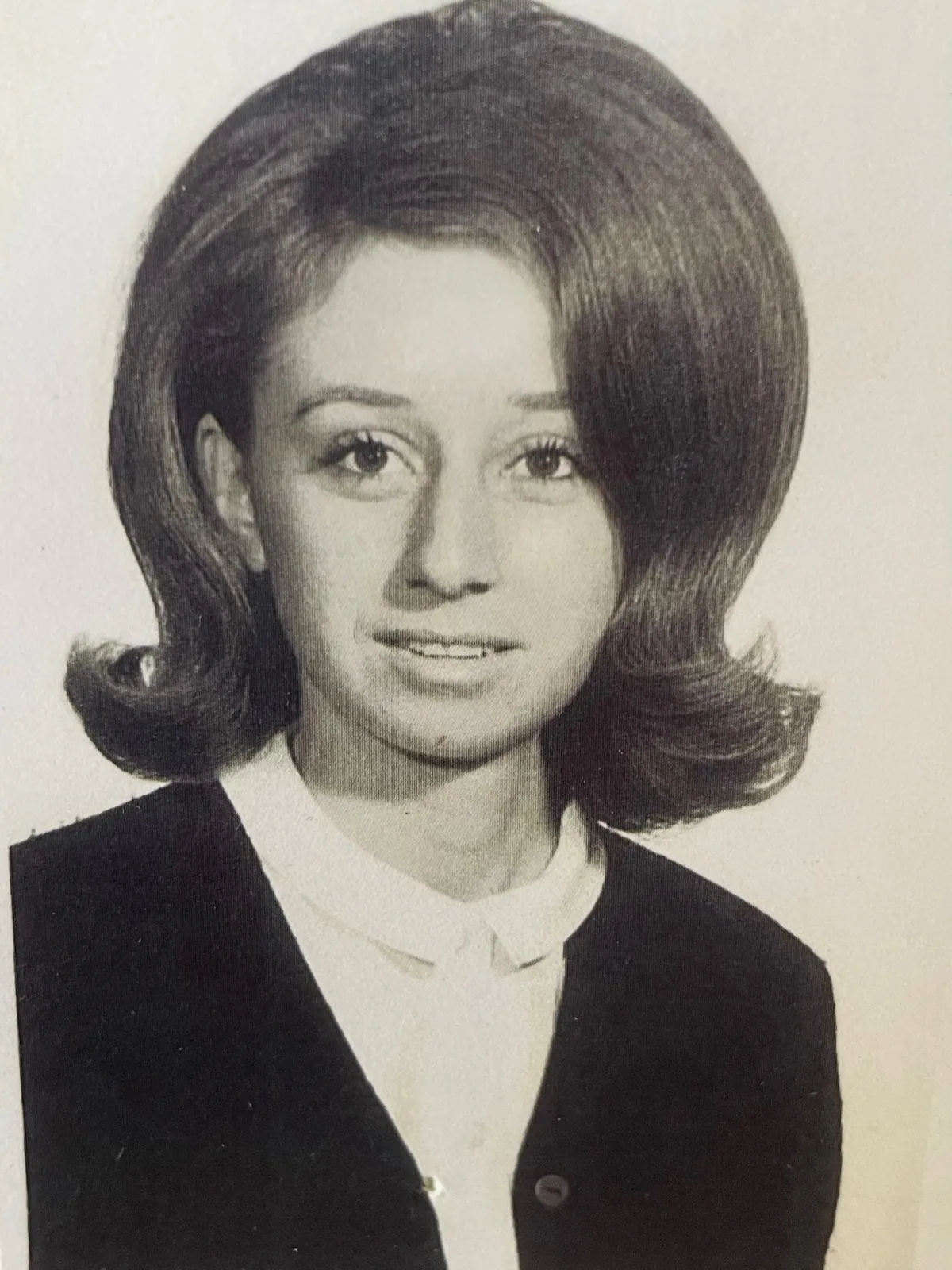
A young face in black and white
The first photograph has the quiet formality of an earlier era. Brenda faces the camera directly, her dark hair shaped into a smooth, carefully arranged style. A light collar and dark outer layer create a simple contrast beneath her face. There is no colorful background or casual glimpse of a room—only the portrait, its fine printed texture and the steady expression of a young woman at the beginning of chapters the photograph cannot yet reveal.
Old portraits invite a particular kind of attention. We study them more slowly because their world is not immediately available to us. The clothing, hairstyle and monochrome surface announce distance, but the eyes shorten it. They meet ours across the years with an expression that feels composed and slightly curious. The result is both historical and personal.
It is tempting to fill every silence around an old photograph with a precise story. Yet the image is most honest when it is allowed to keep some mystery. Without a verified date or occasion, we can still appreciate what it preserves: youth, style, possibility and the care someone took to make the portrait last.
What a portrait cannot yet know
A young person sitting for a photograph cannot see the full shape of the life ahead. Work, marriage, loss, friendship, children, grandchildren, new responsibilities and surprising opportunities are still out of frame. The camera catches a present moment that will later become an origin point.
That uncertainty gives early photographs their emotional power. Viewers encounter the younger face while carrying knowledge of later years. We notice qualities that appear to have endured—the direct gaze, the controlled hint of a smile, the sense of someone ready to engage with the world. Whether those impressions are exact or simply our way of reading the picture, they help connect then with now.
A family archive does not need to explain every year between two images. The space itself tells part of the story. Hairstyles change. Cameras become smaller and more immediate. Formal sittings give way to quick photographs taken amid an event. Life moves from carefully posed possibility to a record rich with people, places and shared experiences.
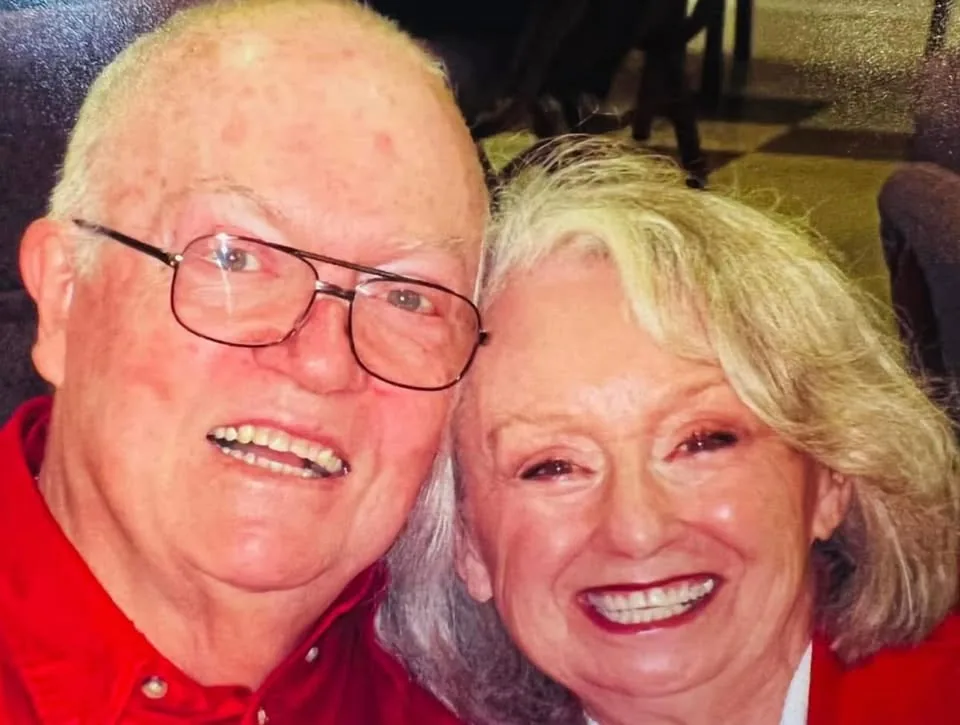
A later photograph filled with closeness
The second image feels entirely different. Color has returned. The frame is close, slightly informal and filled almost completely by two smiling faces. Brenda leans beside an older man wearing glasses and a red shirt. The background is secondary; the photographer’s purpose is simply to catch the pleasure of being together.
Where the earlier portrait holds a careful stillness, this one carries movement and immediacy. It looks like a moment taken during life rather than a session arranged apart from it. The broad smile is no longer only for the camera. It is answered by another person in the frame, turning the picture into a record of companionship.
Placed together, the photographs do not tell us every detail of the journey between them. They do something more useful: they let us feel its length. The young woman in the black-and-white portrait and the woman in the candid color image belong to the same continuing life, but each reflects a different relationship with the camera and the world around it.
The traditions that travel through time
Food belongs naturally in a story about changing generations because recipes are one of the ways the past remains active. A handwritten method may outlive the paper on which it was recorded. A biscuit technique learned by watching can reappear decades later in another pair of hands. The cook changes, the kitchen changes and the equipment improves, yet the gesture continues.
Traditional cooking is not a refusal to move forward. It is a way of carrying useful knowledge into each new season. The modern cook may share a lesson through a screen instead of across a counter, but the heart of the exchange is familiar: pay attention, use your senses, practice and feed somebody when you are done.
That continuity helps explain why an old portrait can belong on a food-and-lifestyle site. Recipes do not emerge from nowhere. They travel with people through homes, relationships and years of ordinary repetition. To understand why a dish matters, it helps to remember that someone kept making it while life changed around them.
Growing older without disappearing
Popular culture often treats youth and age as separate stories. A family album corrects that mistake. The older person does not replace the younger one; she contains her. Early hopes, lessons, mistakes and strengths remain part of the person smiling in the later photograph, even when the surface has changed.
This is why looking through old pictures can feel so surprising. We recognize someone we know, then encounter an expression or style we have never seen. The discovery makes a familiar person larger. She had a whole life before the stories we personally remember, and those earlier chapters continue to shape the present.
Age also changes what a photograph may mean. A picture once kept for appearance can become precious for the room it recalls or the person standing just outside the frame. The technical quality matters less than the fact that the moment survived.
Leave room between the photographs
A meaningful visual timeline does not need an image from every year. In fact, two well-chosen photographs can invite deeper reflection than a crowded gallery. The distance between them encourages readers to consider all the mornings, meals, decisions and relationships that no camera recorded.
The first picture gives us poise and possibility. The second gives us warmth and shared joy. Together they suggest a life not frozen in one public image, but lived through many changing roles. That is the gift of a then-and-now pairing: it honors transformation while showing that identity has a long memory.
Time will continue to add photographs. New kitchens, new gatherings and new faces will enter the archive. Still, the oldest portrait will remain an essential beginning—not because it explains everything that followed, but because it lets us meet the young woman who had not lived it yet.