Portraits from the Kitchen
A finished dish becomes more memorable when we can see the person presenting it. The platter tells us what was made; the cook’s expression tells us why sharing it matters.
The moment a recipe meets its audience
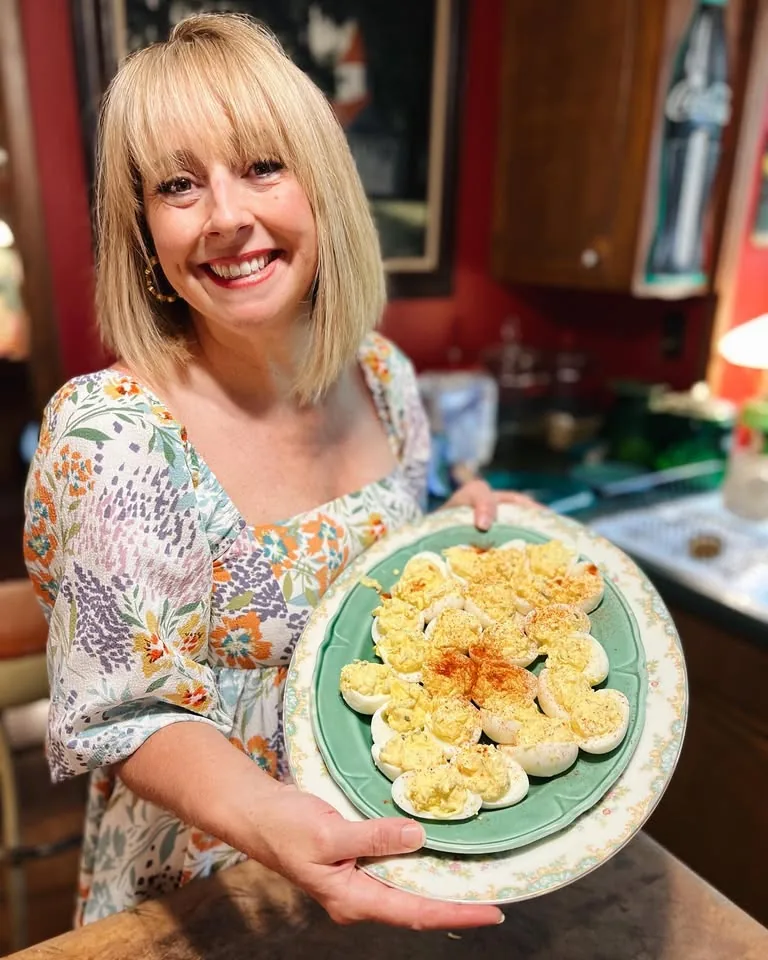
The opening portrait is direct, colorful and full of welcome. A woman stands in a red-walled kitchen, holding a large floral platter toward the camera. Deviled eggs fill the green center in neat rows, their yellow filling finished with a warm red dusting. Her flowered dress echoes the colors around the rim, joining the cook and the dish into one cheerful composition.
This is not simply a photograph of food. The platter is angled forward, almost as if it is being offered through the frame. The cook’s broad smile completes the gesture. Before we know the exact ingredients or method, we understand that the dish is meant to leave the counter and become part of a gathering.
That human presence changes how readers encounter a recipe. A tightly cropped food image can demonstrate texture and color, but a portrait adds scale, personality and intention. We see how generous the platter is, how comfortably it is held and how pleased the cook appears to have finished it.
The kitchen is part of the portrait
The background deserves attention because it establishes the food’s natural habitat. Wooden cabinets, a sink, a bright lamp and objects on the counter show a room in active use. Nothing suggests that the dish was carried into a separate studio for the photograph. It belongs exactly where we see it.
Real kitchens are layered with evidence of work. A towel may wait beside the sink. Ingredients are moved aside instead of disappearing completely. A pan cools while another dish is presented. These details reassure readers that home cooking can be beautiful without requiring a room emptied of ordinary life.
The most convincing food stories often retain this context. They let polished serving pieces coexist with practical counters and familiar appliances. The result feels achievable: the reader can imagine making something similar in a kitchen that also contains yesterday’s mail, a coffee pot and a cabinet that never closes quite perfectly.
A second portrait, closer to the stove
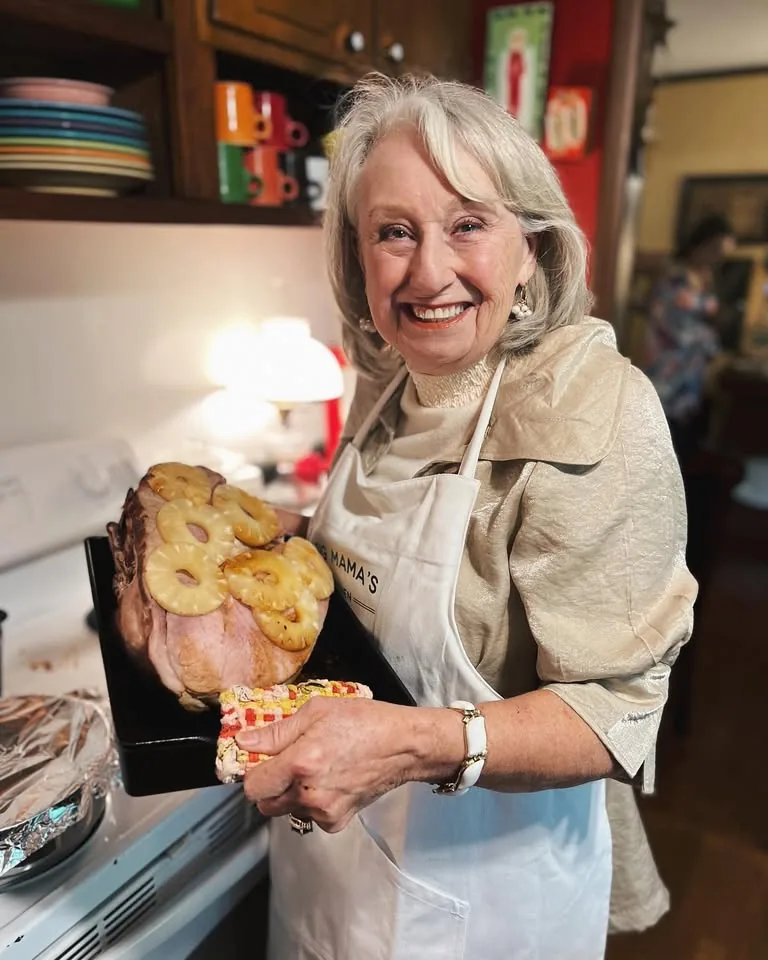
The next image shifts both the person and the dish. Brenda stands near the stove in a light apron, holding a large glazed ham decorated with pineapple rings. A patterned oven mitt protects one hand, a wonderfully practical detail that keeps the portrait connected to the heat and weight of the cooking process.
The ham has the visual abundance of a celebration dish. Its browned surface and bright fruit suggest a centerpiece intended for slicing and sharing. Yet Brenda’s expression remains the strongest element in the frame. She looks toward the camera with the satisfaction of someone who has reached the enjoyable end of a long sequence: seasoning, baking, checking, lifting and finally presenting.
Together, the two portraits show different sides of a shared kitchen culture. One cook holds a cool platter ready for the table. Another carries a substantial main dish directly from the cooking area. One recipe is assembled in many small portions; the other will be carved. Both are made complete by the people ready to serve them.
Why hands matter in food photography
Hands give food photographs a sense of action even when everyone is standing still. They reveal how a platter is balanced, how large a roast actually is and how carefully a finished dish must be carried. They also create a visual line between the cook and the result.
In these images, the food is not an object placed at a distance from its maker. It is supported, protected and offered. That relationship reflects the labor hidden inside every finished plate. Ingredients do not arrange themselves; someone gives them attention and accepts responsibility for carrying them safely to the table.
Photographing that gesture honors more than presentation. It acknowledges the cook as part of the meal’s story. Readers see not only what to make, but the pleasure that can come from making it for other people.
Portraits reveal scale and generosity
A recipe may list servings as a number, but a portrait communicates abundance immediately. The deviled-egg platter is broad enough to require both hands. The ham fills its tray and appears substantial beside Brenda. These visual cues tell us that the dishes belong to company rather than a solitary plate.
Scale influences the emotional tone of food. A small individual dessert can feel intimate; a full platter feels communal. It announces that multiple people are expected and that the cook has planned for appetites beyond her own.
This is especially important in Southern food storytelling, where many beloved dishes are designed to travel, pass and divide generously. Casseroles, breads, sliced meats, layered cakes and filled platters look most natural when pictured in relation to the people who will carry and share them.
The expression after the work is done
Cooking portraits are often made at a narrow point in time. The dish must be complete enough to show, but it has not yet begun to disappear. The cook pauses between preparation and service, when the kitchen may still need cleaning and guests may already be waiting.
A smile at this moment contains relief as well as pride. The recipe worked. The food is ready. What began as separate ingredients now has shape, aroma and purpose. The next step belongs to the table.
That pause is worth preserving because meals themselves are temporary. The neat rows of eggs will soon be broken. The ham will be sliced and passed. A photograph keeps the brief instant when every portion was present and the person behind it could say, without words, “Here it is.”
Making kitchen portraits feel honest
The strongest portraits do not require the subject to pretend the work was effortless. An apron, mitt, flour mark or busy counter gives the finished dish credibility. Good lighting and careful framing help viewers see clearly, but excessive perfection can remove the very life that makes a home kitchen interesting.
A useful sequence might include the cook working, the moment of presentation and the dish at the table. When only one portrait is available, descriptive writing can help readers notice the story already present in clothing, tools, surroundings and expression.
Accuracy also matters. Captions should identify only foods and details that are reasonably visible. Private relationships, precise occasions and recipe claims should not be invented for emotional effect. Warmth is strongest when readers can trust it.
The person is the lasting ingredient
Years later, viewers may not remember every component of a particular meal. They may remember who stood in the kitchen, who insisted everyone take another helping and who smiled while carrying the platter into the room. Portraits preserve that human ingredient before it slips behind the recipe.
The deviled eggs and glazed ham make these images appetizing, but the faces make them stories. They remind us that home cooking is always personal: somebody chooses the dish, does the work and hopes it will bring pleasure to the people gathered nearby.
That is why a portrait belongs beside a recipe. Instructions teach us how food is made. The person holding the platter shows us what the making is for.