The Feeling of a Well-Loved Southern Kitchen
The most inviting kitchen is not the one that looks untouched. It is the one where the skillet stays useful, the wooden spoons are within reach and a warm biscuit never has to travel far to find a plate.
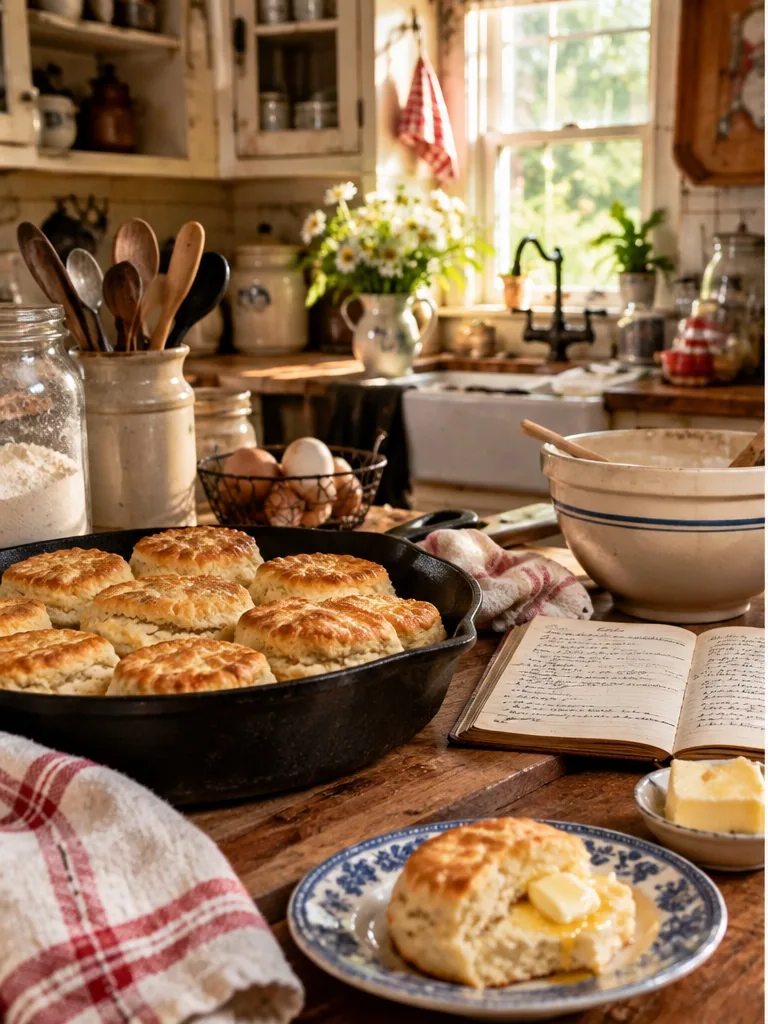
This image is a Southern-inspired editorial illustration, not a documentary photograph of Brenda Gantt or her home.
A room that shows its purpose
The scene opens on a wooden worktable crowded with the useful evidence of baking. Golden biscuits fill a black cast-iron skillet. One has already been opened on a blue-and-white plate and topped with butter. A striped mixing bowl waits with a wooden spoon inside, while eggs, flour and well-used utensils remain close enough to suggest the work has only just paused.
Sunlight enters through the window above a deep sink. Flowers stand in a pitcher, jars line the counter and open cabinets reveal dishes collected over time. The room is beautiful, but its beauty comes from purpose. Every object seems to have a reason for being where it is.
This is the visual language of a well-loved kitchen: not flawless surfaces, but order shaped by habit. The cook knows which spoon reaches the bottom of the bowl, which towel can handle a hot skillet and where to set the flour so it is ready without getting in the way.
Cast iron carries both heat and history
The skillet anchors the image because cast iron has a physical presence unlike lighter cookware. It stores heat, builds a seasoned surface through use and moves from oven to table without needing to hide its working character. Scratches, darkening and small variations become signs of service rather than defects.
Biscuits benefit from that stored heat. A warmed skillet helps the bottoms begin cooking quickly, while close placement encourages the sides to rise against one another. The result can be a pan of individual portions that still feels like one shared bake.
Care for cast iron is part of its tradition. The pan should be cleaned, dried thoroughly and protected with a very thin layer of oil when needed. The process is simple but regular. A skillet lasts not because it is indestructible, but because somebody repeatedly takes care of it.
The handwritten recipe stays open
Beside the skillet lies an open notebook filled with handwriting. It suggests a recipe recorded for use rather than display—something consulted with flour nearby and butter already softening. Handwritten recipes carry information beyond ingredients. Changes in ink, cramped additions and stains can show which instructions mattered most.
A family recipe is often incomplete by modern publishing standards. It may assume the cook already knows the bowl size, oven behavior or texture to expect. Phrases such as “until it looks right” contain years of observation compressed into a few words.
That is why cooking alongside another person remains valuable. The written recipe preserves the route, while demonstration reveals the landmarks. A learner sees how lightly dough is handled, how thick it should be rolled and when a biscuit has browned enough to leave the oven.
Everyday tools become personal
A crock filled with wooden spoons appears at the edge of the work area. None needs to be decorative to contribute warmth. Their different shapes suggest different jobs: stirring a thick batter, reaching around a pot or scraping the flavorful bottom of a pan.
Repeated use teaches the hand which tool to choose before the cook consciously explains it. A favorite spoon has the right weight. A mixing bowl stays steady on the counter. A pastry cutter or biscuit rounder becomes familiar enough that attention can move from equipment to texture.
This familiarity is one reason older kitchens often feel comforting. Objects earn their places. The room grows efficient around the habits of the people who use it, and that efficiency leaves more space for conversation.
Useful clutter and thoughtful order
A working kitchen will never remain empty for long. Ingredients arrive, dishes dry and tomorrow’s meal begins before today’s is completely cleared. The goal is not to eliminate all visible activity, but to keep it understandable.
Grouping tools by use creates calm without removing character. Baking ingredients can share a shelf. Wooden utensils can stay beside the stove. Frequently used bowls deserve the easiest cabinet. A clear section of counter provides a dependable landing place when a hot pan leaves the oven.
Thoughtful order also improves safety. Towels stay away from flame. Heavy cookware is stored where it can be lifted securely. Knives have a consistent home. The room becomes welcoming because people can move through it confidently.
Why morning light suits the kitchen
The bright window gives the illustration its gentle mood. Morning light naturally belongs with biscuit making because both suggest a beginning. Before the day scatters people into separate routines, breakfast offers a brief chance to gather around something warm.
Natural light is useful as well as beautiful. It reveals the true color of dough, makes surfaces easier to clean and helps a cook notice small changes. A window near the sink turns ordinary washing and preparation into a connection with weather and season.
Flowers on the sill reinforce that connection. They need not be elaborate. A few stems from the yard can mark what is blooming now and bring the garden’s changing calendar into a room governed by meals.
A kitchen makes hospitality practical
Hospitality begins in a room like this long before guests sit down. Dough is mixed, butter is softened and serving pieces are chosen. The cook anticipates hunger and turns that anticipation into tasks that can be completed one by one.
Biscuits are especially hospitable because they are easy to divide and generous with accompaniments. They can carry butter, preserves, gravy or a piece of savory filling. A basket passed around the table allows each person to choose while keeping the meal communal.
The best kitchen layout supports this generosity. There is room for another pair of hands, a stool for conversation and a clear path from oven to table. Guests do not feel they are intruding on a performance; they are welcomed into the work.
The room keeps changing with the cook
No kitchen remains fixed. New appliances arrive, old bowls break and the people using the space adapt. A recipe once memorized may be written down for someone younger. A pan inherited from another household begins collecting marks in a new one.
Change does not erase tradition. Tradition survives precisely because people adjust it to the tools, ingredients and time available. The important qualities—attention, resourcefulness and the intention to feed others—can move from one room to another.
What makes a kitchen well loved
The illustration’s warmth comes from the relationship among its objects. The open recipe suggests memory. The flour and eggs suggest preparation. The skillet shows completion, and the buttered biscuit shows that someone has already begun to enjoy the result.
A well-loved kitchen contains all these stages at once. It remembers earlier cooks, serves the present household and prepares knowledge for the next person who asks how the biscuits were made.
The room does not need to be grand, fashionable or perfectly quiet. It only needs to make useful work possible and welcome people toward the table. When that happens often enough, cabinets and counters become more than a setting. They become part of the family story.