Why Deviled Eggs Belongs on a Southern Table
Deviled eggs are a familiar Southern appetizer with creamy yolk filling, gentle mustard tang, and a paprika finish. They are inexpensive, easy to portion, and welcome at church suppers, picnics, holidays, and family gatherings. A full platter looks celebratory even though the ingredients are everyday staples.
The best deviled egg has a tender white, a smooth filling that holds a soft peak, and enough acidity to keep the mayonnaise from tasting heavy. This recipe uses yellow mustard, sweet pickle relish, and cider vinegar for classic balance. Each ingredient remains modest so the flavor of the egg still leads.
Choosing Eggs That Peel More Easily
Very fresh eggs can be frustrating to peel because the white clings closely to the inner membrane. Eggs that have spent about a week in the refrigerator often release more cleanly after cooking. Check the carton date, avoid cracked shells, and keep the eggs chilled until the saucepan is ready.
Choose large eggs of similar size so their yolks finish together. Six eggs make twelve halves, but boiling one extra provides insurance for a torn white or an off-center yolk. The spare yolk can also rescue filling that becomes too loose.
A Gentle Method for Tender Whites
Arrange the eggs in a single layer and cover them with about an inch of cool water. Starting cool lets the shells and interiors warm gradually, reducing cracks. Bring the water just to a full boil, cover the pan, remove it from the heat, and let the eggs stand for 11 minutes. Residual heat cooks them without the rough movement of prolonged boiling.
Transfer the eggs immediately to ice water for at least 10 minutes. Rapid cooling stops carryover cooking, helps prevent the gray-green ring that can form around yolks, and makes the eggs easier to handle. The ring is harmless, but it indicates that the yolks became hotter than necessary.
How to Peel Without Tearing the Whites
Tap each cooled egg gently all over and roll it under your palm to loosen the shell. Begin at the wider end, where a small air pocket usually provides an opening. Peel under a thin stream of cool water or in the ice bath so water can work beneath the membrane.
Handle gently because deep tears make the halves difficult to fill. If small shell fragments remain, rinse the peeled egg and pat it dry with a clean towel. Do not leave peeled eggs soaking in water, which can make their surface slippery and dilute their flavor.
Centering and Cutting the Eggs
Centered yolks are mainly cosmetic, but they create stronger cups with even walls. Some cooks store the carton on its side for several hours before cooking to encourage yolks toward the center. Even when a yolk rests near one edge, careful slicing preserves a useful white.
Slice lengthwise with a clean sharp knife and wipe the blade between eggs to prevent yellow smears. Lift each yolk with a teaspoon rather than squeezing the white. Place the empty halves on a towel-lined tray so they do not slide while the filling is prepared.
Making a Smooth, Balanced Filling
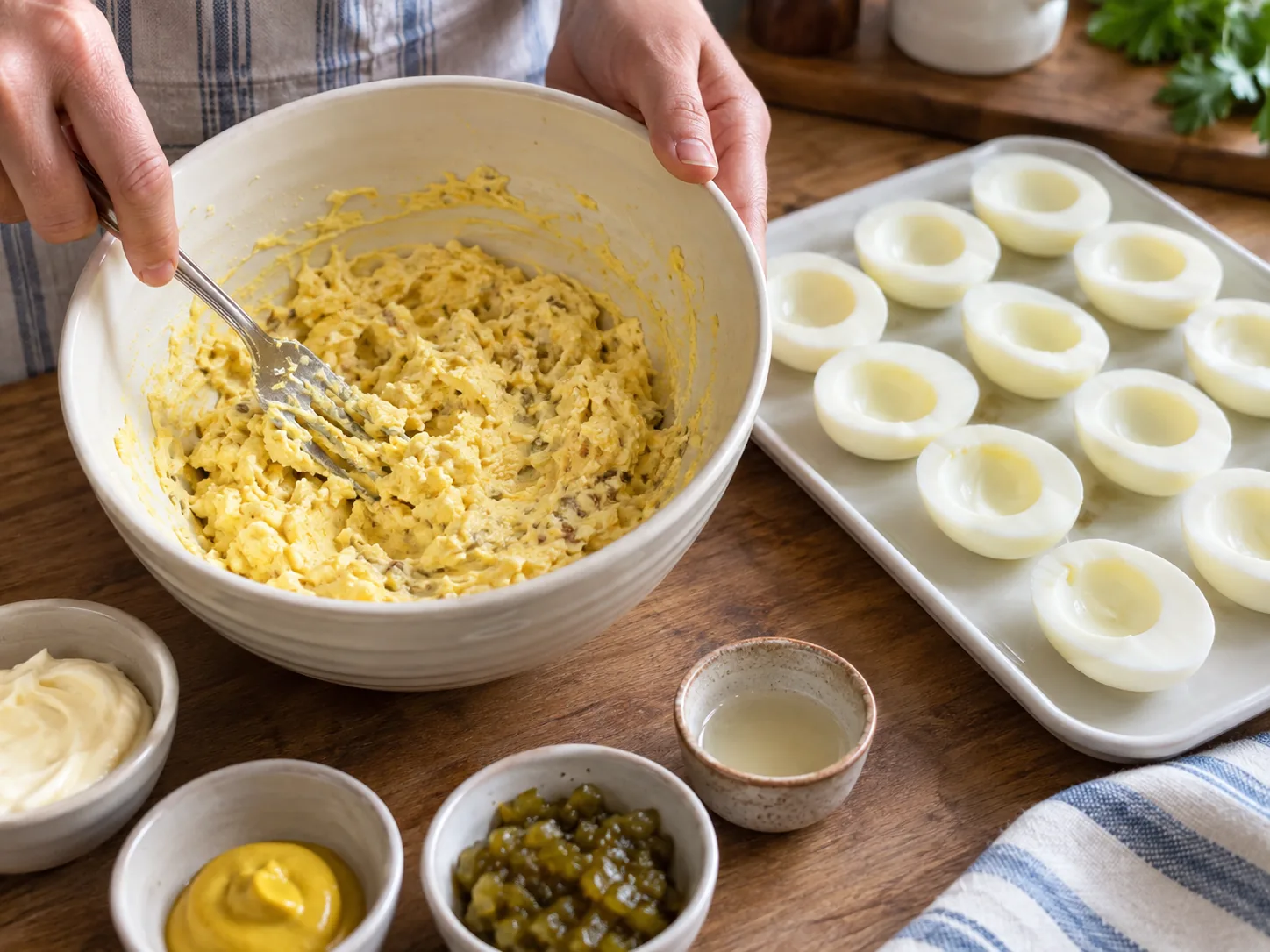
Mash the yolks completely before adding mayonnaise. A fork gives a pleasantly homemade texture; pressing yolks through a fine-mesh sieve creates an especially silky filling for piping. Breaking every dry lump first is easier than trying to smooth it after liquids are added.
Mix in mayonnaise gradually. Yolks vary in size and relish carries moisture, so holding back a little protects against loose filling. Yellow mustard adds sharpness, sweet relish contributes tang and texture, and cider vinegar brightens the mixture. Taste before adding more salt because mayonnaise, mustard, and relish are already seasoned.
The finished mixture should be creamy but firm enough to mound on a spoon. If too stiff, add mayonnaise by the teaspoon. If too loose, chill it for 15 minutes or mash in the yolk from a spare egg. Adding dry mustard to thicken it can quickly make the flavor harsh.
Spoon or Pipe the Filling
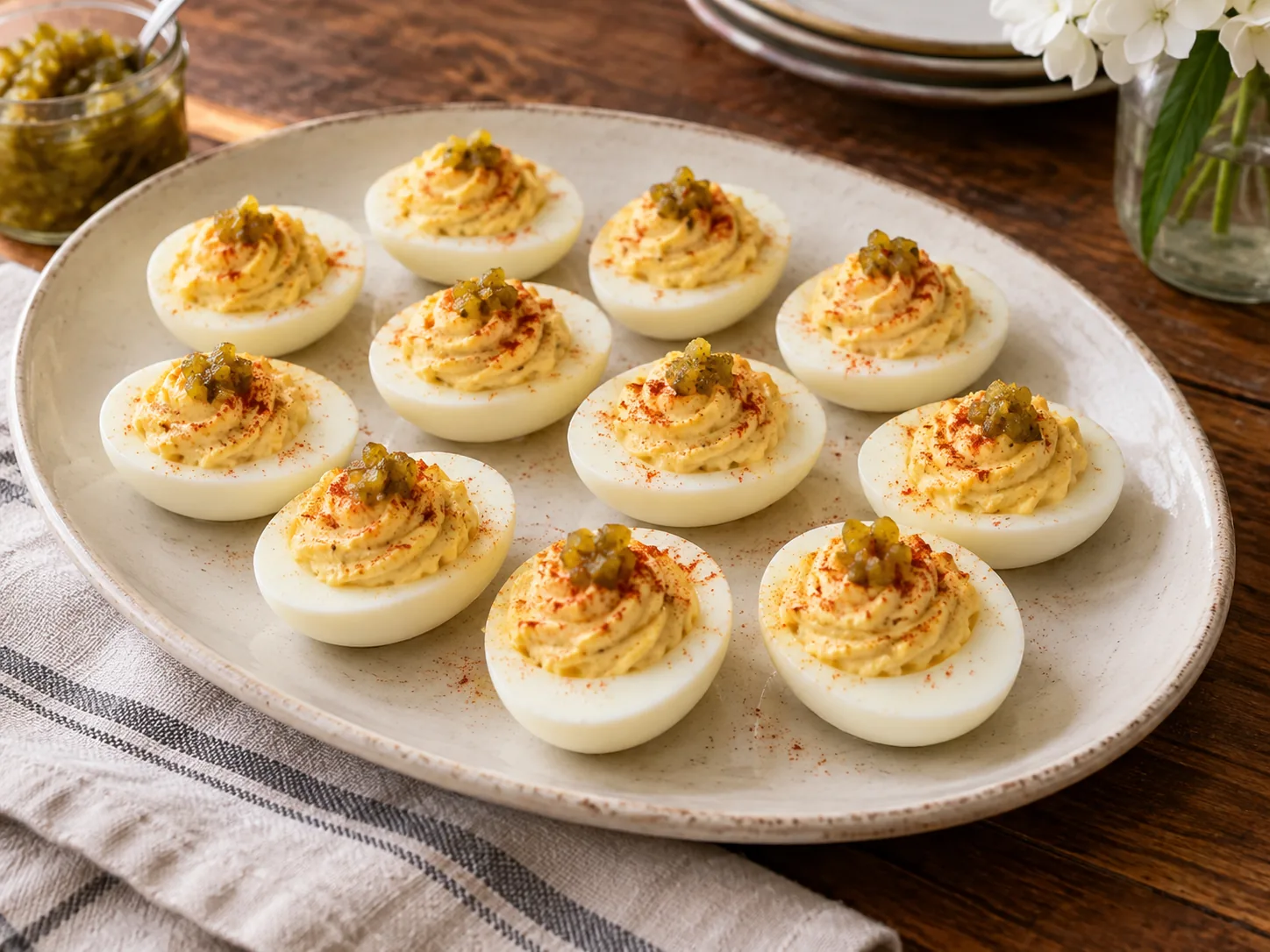
A teaspoon gives deviled eggs a casual traditional appearance. For a neater platter, spoon filling into a zip-top bag, press out excess air, snip one corner, and pipe it into the whites. A pastry bag with a large star tip creates decorative ridges, but chunky relish may clog a narrow tip.
Divide the filling among all twelve halves before adding extra to any one egg. Dust paprika from several inches above for light, even color; too much can taste dusty. Add delicate herbs or crisp garnishes shortly before serving so they remain fresh.
What to Watch For
A rolling boil can toughen the whites and increase cracking. An incomplete ice bath allows yolks to keep cooking. Wet whites cause filling to slide, while too much mayonnaise makes it lose its shape. Measure liquid ingredients initially, then adjust by taste and texture rather than pouring freely.
For gatherings, keep the platter refrigerated until close to serving. On a warm day, nest it over a larger tray of ice and replace melted ice when needed. Refrigerate eggs within two hours, or within one hour if the outdoor temperature is above 90°F.
Serving Ideas
Serve chilled at picnics, church suppers, holiday tables, and barbecues, or alongside fried chicken, ham, potato salad, coleslaw, and fresh vegetables. A dedicated egg tray prevents sliding, but lettuce leaves or finely shredded cabbage can steady them on an ordinary platter.
Make It Your Own
Use dill relish instead of sweet for a sharper filling, or add a few drops of hot sauce for warmth. Finely minced celery supplies crunch, crumbled bacon adds smoke, and fresh dill brings a garden note. Add variations sparingly so the filling remains balanced and pipeable.
For less sweetness, omit the relish and use minced dill pickle with a drop of pickle brine. Dijon can replace part of the yellow mustard for greater complexity. Taste again after chilling because cold temperatures soften the perception of salt and acidity.
Make Ahead and Storage
Cook and peel eggs up to two days ahead and store them covered in the refrigerator. For the neatest result, keep empty whites and filling separately for up to one day, press food-safe wrap directly onto the filling, and assemble several hours before serving.
Store finished deviled eggs covered and refrigerated for up to two days for best quality. Do not freeze them because both whites and mayonnaise-based filling develop an unpleasant texture after thawing. Deviled eggs are served cold and should never be reheated.
Jump-to-Recipe Card
Ingredients
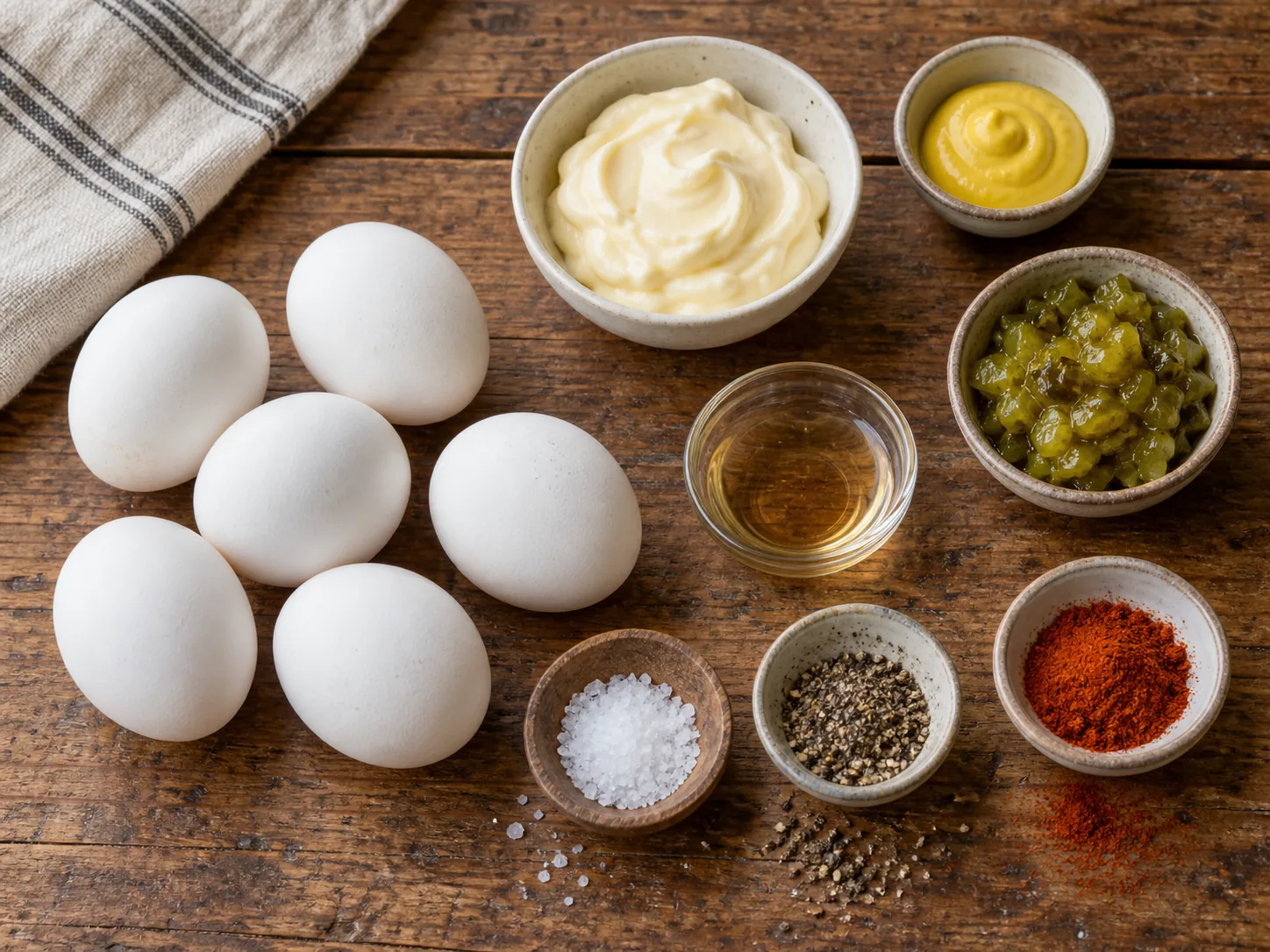
- 6 large eggs
- 3 tablespoons mayonnaise
- 1 teaspoon yellow mustard
- 1 teaspoon sweet pickle relish
- 1 teaspoon apple cider vinegar
- ⅛ teaspoon salt, plus more to taste
- ⅛ teaspoon black pepper
- Paprika for garnish
Instructions
- Place the eggs in a saucepan, cover with cool water by 1 inch, and bring just to a boil. Cover, remove from the heat, and stand for 11 minutes.
- Transfer immediately to ice water for at least 10 minutes. Tap and peel under cool running water, then halve lengthwise.
- Remove the yolks and mash them until no large lumps remain. Mix in mayonnaise, mustard, relish, vinegar, salt, and pepper until creamy.
- Spoon or pipe the filling evenly into the 12 egg-white halves. Add a tiny splash of water or pickle juice only if the filling is too stiff.
- Dust lightly with paprika, cover without crushing the filling, and chill until serving.
Calculate
Calculate
Calculate
Calculate
Nutrition values should be calculated from the final tested recipe quantities before publication.