Why Chicken Pot Pie Belongs on a Southern Table
Chicken pot pie is the kind of supper that turns modest ingredients into something generous. Cooked chicken, a few vegetables, broth, milk, butter, and flour become a complete meal with a flaky lid and a creamy center. It is especially useful after a roast-chicken dinner because the meat and homemade broth can be carried into a second meal without feeling like leftovers.
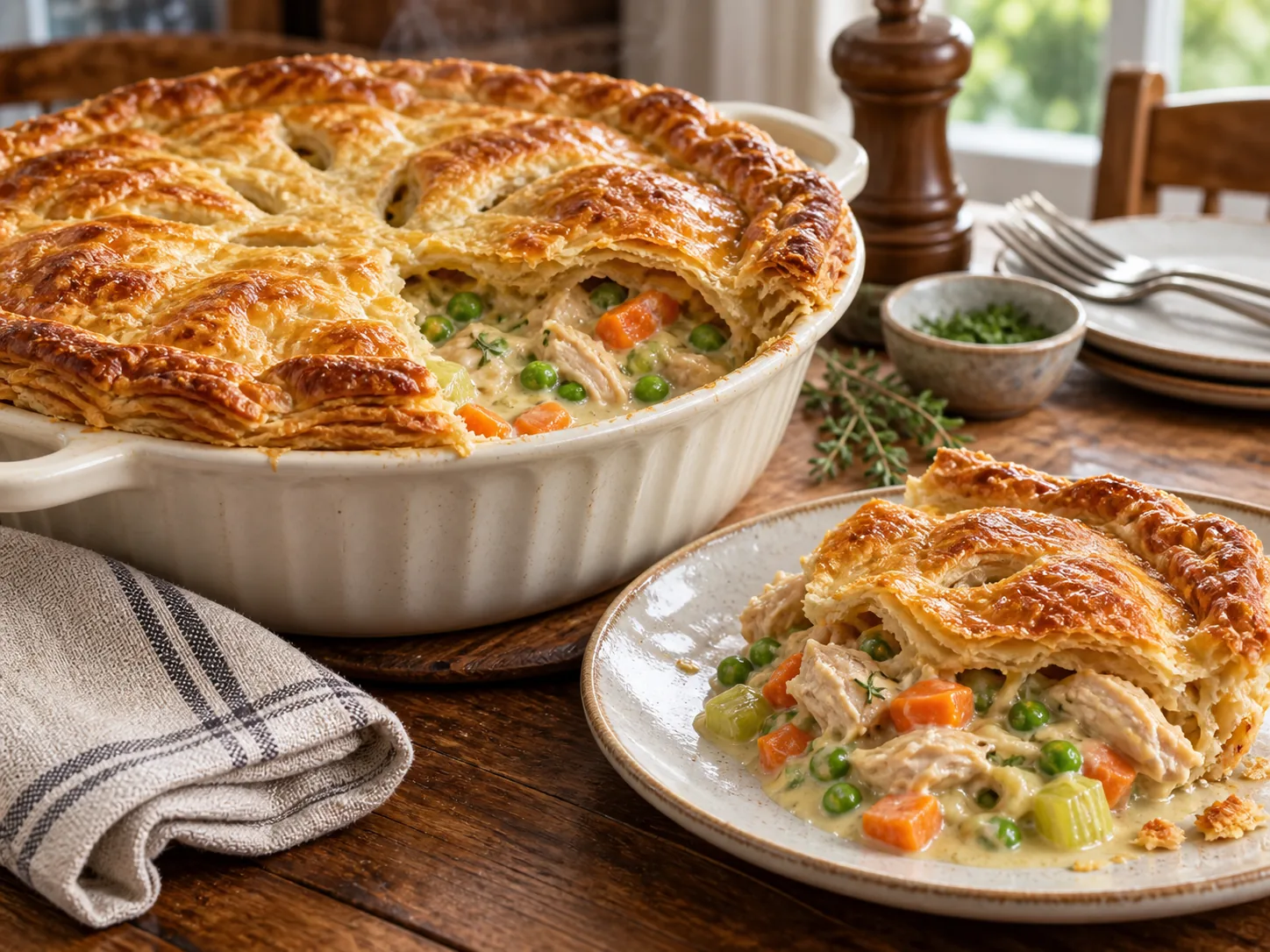
The best version is defined by contrast. The filling should be rich enough to coat a spoon but loose enough to settle around the chicken. The carrots and celery should be tender without disappearing, the peas should stay bright, and the pastry should rise into crisp layers. That balance makes every spoonful feel comforting rather than heavy.
Why This Method Works
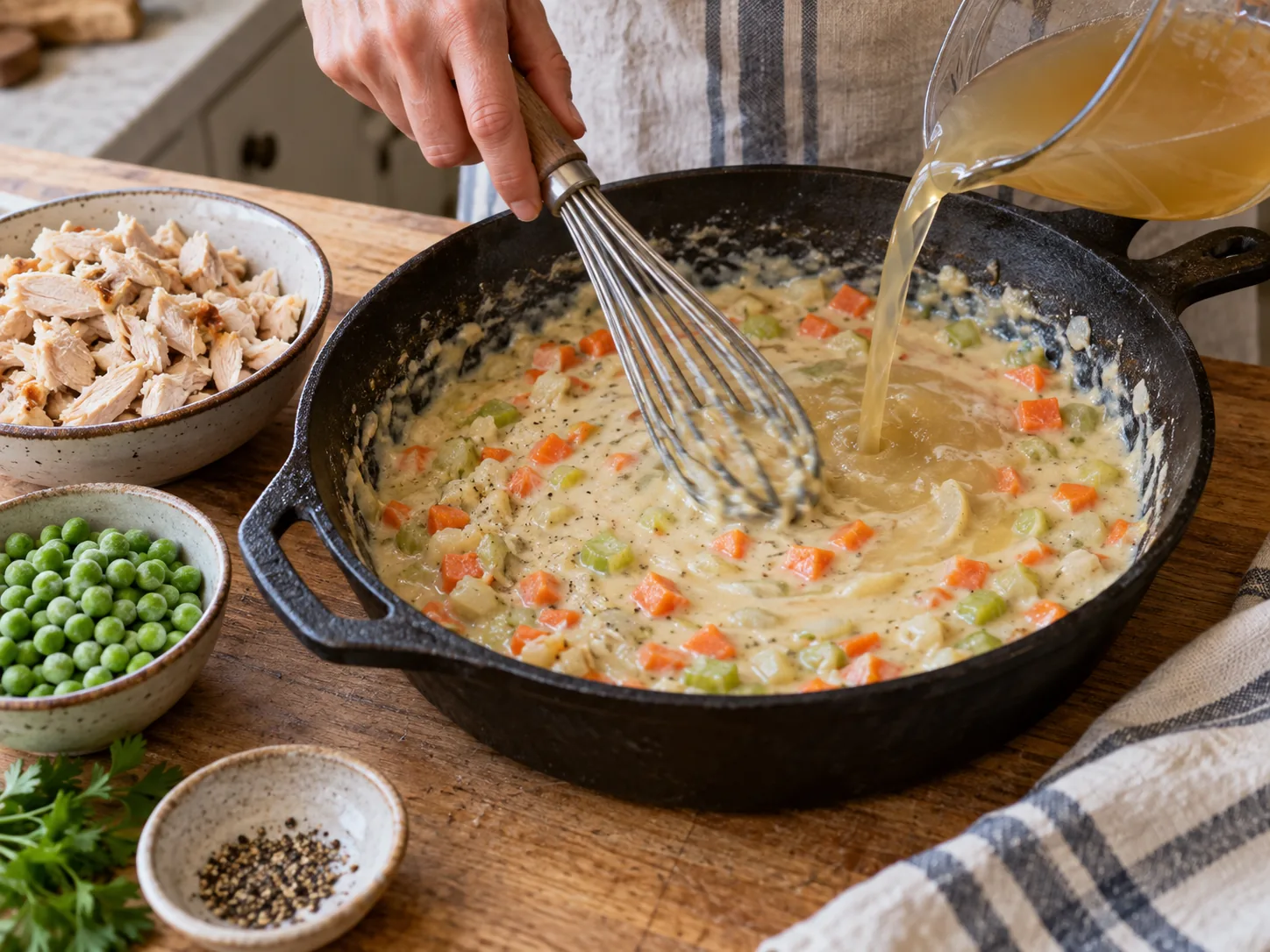
The sauce begins with butter and flour cooked together into a pale roux. Cooking the flour for a full minute removes its raw taste; adding warm broth gradually keeps the sauce smooth. Milk softens the savory broth, while thyme and black pepper give the filling a familiar Sunday-supper aroma without overpowering the chicken.
The filling is allowed to cool briefly before the pastry goes on. This small pause matters: very hot steam can soften the underside of puff pastry before the oven has time to set its layers. A shallow baking dish also gives the pastry more surface area and helps the center cook at the same pace as the edges.
What to Watch For
When the broth and milk first enter the roux, the mixture will look thin. Keep whisking over a gentle simmer; after three to five minutes it should leave a clean trail when a spoon is drawn across the pan. Stop before it becomes as thick as mashed potatoes because the sauce continues to tighten in the oven.
The finished pie should be bubbling around the edges and the pastry should be browned across the center—not merely dark at the corners. If the edges color too quickly, cover only those areas loosely with narrow strips of foil. Rest the pie for 10 to 15 minutes after baking so the gravy can settle and each serving holds together.
Ingredient Notes and Smart Substitutions
Chicken: Roasted or gently poached chicken gives the cleanest flavor, but rotisserie chicken is convenient. Use a mixture of breast and thigh meat when possible; thigh meat stays especially tender during the second cooking.
Vegetables: Fresh carrots, celery, and onion form the savory base. Frozen peas go in near the end so they do not become dull or mushy. A frozen pea-and-carrot blend also works—add it with the chicken after the sauce has thickened.
Pastry: Thaw puff pastry in the refrigerator until flexible but still cold. Refrigerated pie dough can replace it for a more traditional crust. Whichever topping you choose, cut several vents so steam can escape instead of making the center soggy.
Serving Ideas
Because the pie already contains meat, vegetables, gravy, and pastry, it needs only a fresh companion. Serve it with green beans, roasted broccoli, lightly dressed greens, or a crisp cucumber salad. For a larger Sunday meal, add sliced tomatoes or collard greens and finish with a simple fruit dessert.
Make It Your Own
Replace up to half the chicken with cooked turkey after a holiday meal. Add sautéed mushrooms for deeper flavor, or substitute a small diced potato for some of the carrots; cook potato pieces until nearly tender before making the roux. Rosemary or sage can replace the thyme, but use them lightly. For individual pies, divide the filling among oven-safe ramekins and begin checking them about ten minutes earlier.
Common Pot Pie Problems
Runny filling: The sauce was not simmered long enough before assembly, or the vegetables released extra water. Let the sauce visibly coat the spoon before adding chicken. Lumpy gravy: Liquid was added too quickly; whisk in the first cup a little at a time. Soggy pastry: The filling was extremely hot or the pastry was warm and soft. Cool the filling briefly and keep the pastry refrigerated until needed.
Jump-to-Recipe Card
Ingredients
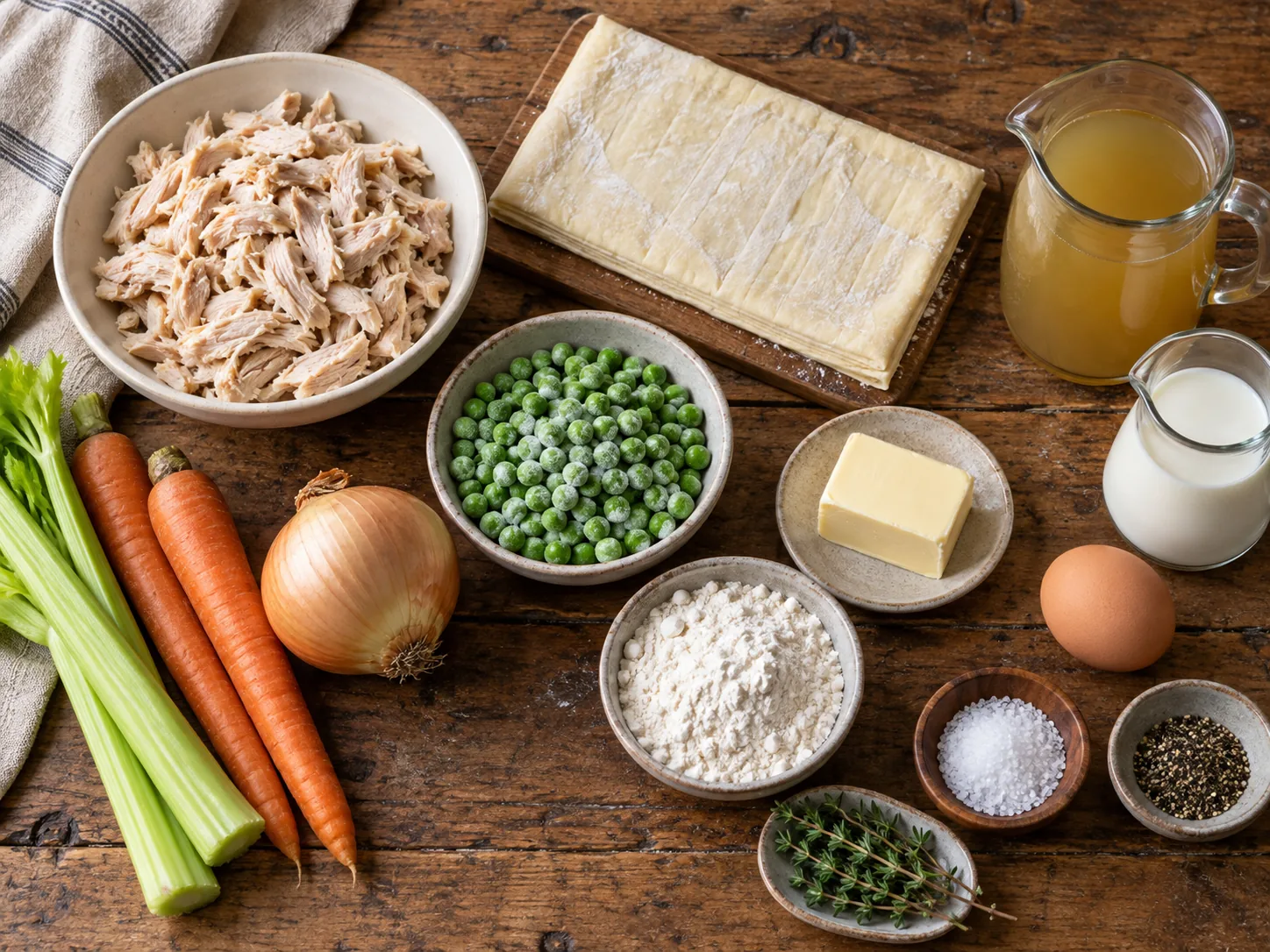
- 3 cups cooked chicken, cut into bite-size pieces
- 3 tablespoons butter
- 1 small yellow onion, diced
- 1 cup diced carrots
- 1/2 cup diced celery
- 1/3 cup all-purpose flour
- 2 cups chicken broth
- 3/4 cup whole milk
- 1 cup frozen peas
- 1/2 teaspoon dried thyme
- 3/4 teaspoon kosher salt, plus more to taste
- 1/2 teaspoon freshly ground black pepper
- 1 sheet frozen puff pastry, thawed but cold
- 1 large egg beaten with 1 teaspoon water
Instructions
- Heat the oven to 400°F. Set a 2-quart baking dish on a rimmed sheet pan to catch any bubbling filling.
- Melt the butter in a large skillet over medium heat. Add onion, carrots, and celery. Cook 7 to 9 minutes, stirring occasionally, until the onion is translucent and the carrots are beginning to soften.
- Sprinkle in the flour, thyme, salt, and pepper. Stir constantly for 1 minute so every vegetable is coated and the flour loses its raw aroma.
- Add the broth gradually while whisking, then whisk in the milk. Bring to a gentle simmer and cook 3 to 5 minutes, stirring around the corners of the pan, until the sauce coats the back of a spoon.
- Fold in the chicken and frozen peas. Taste and adjust the seasoning. Transfer the filling to the baking dish and let it stand for 10 minutes so it is warm rather than fiercely steaming.
- Lay the cold puff pastry over the dish. Trim excessive overhang, press the pastry to the rim, and cut 3 or 4 vents in the center. Brush lightly with egg wash.
- Bake 30 to 35 minutes, until the pastry is puffed and deeply golden and the filling bubbles at the edges. Rest 10 to 15 minutes before serving.
Calculate
Calculate
Calculate
Calculate
Nutrition values should be calculated from the final tested recipe quantities before publication.