Why Peach Cobbler Belongs on a Southern Table
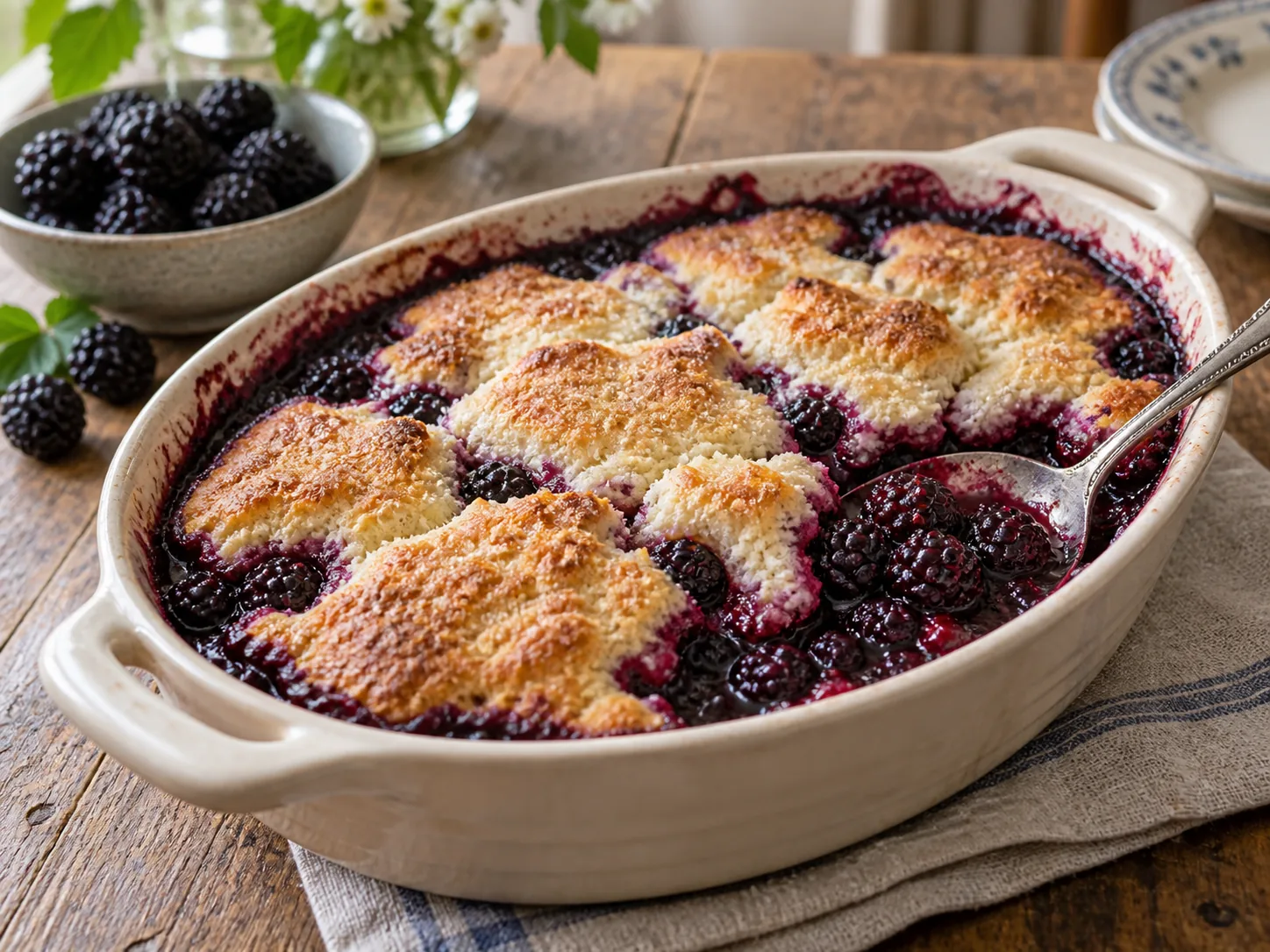
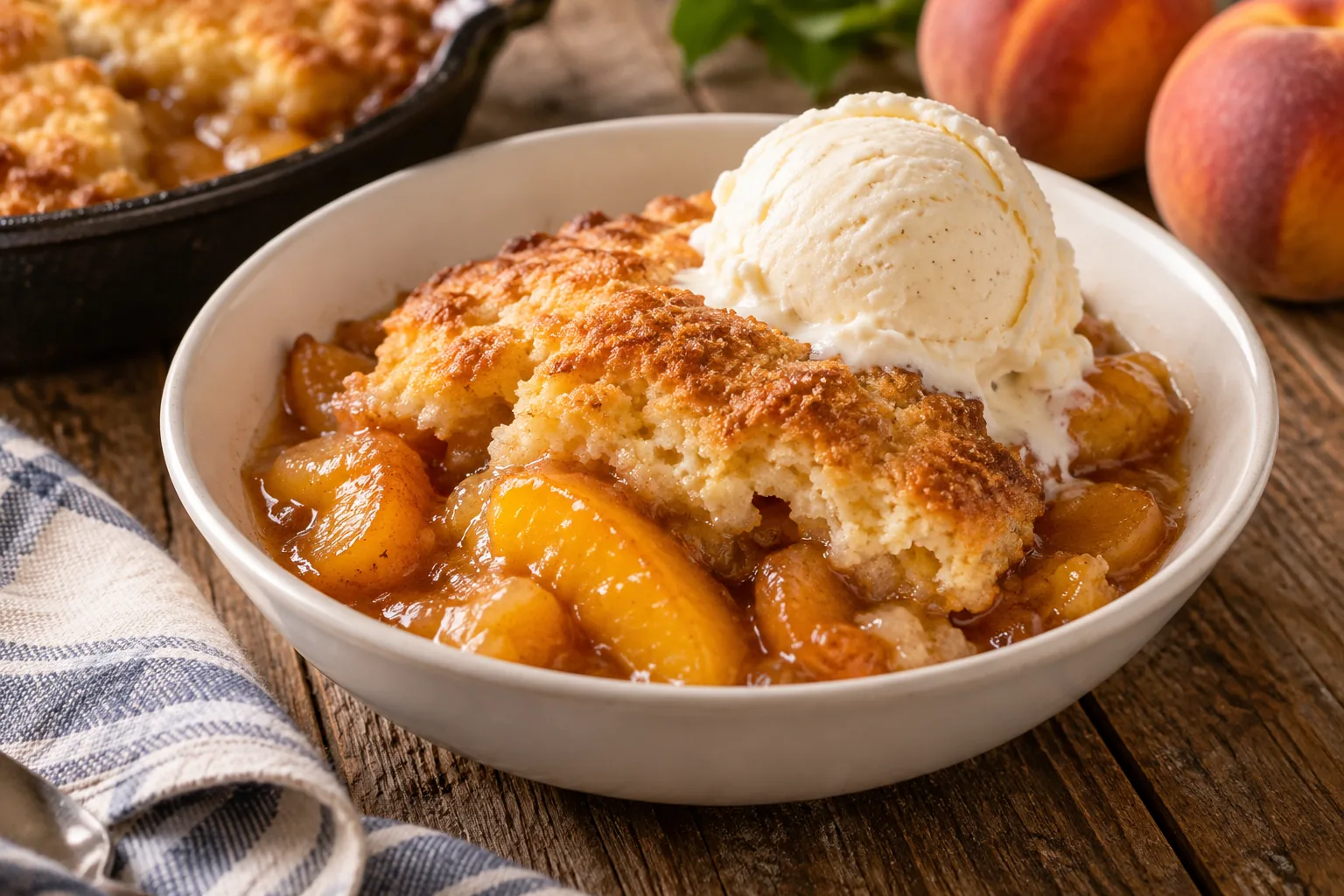
Peach cobbler captures the best part of summer fruit without the precision demanded by pie. Ripe peaches release fragrant juice beneath a rustic biscuit topping, whose exposed peaks turn crisp while the underside absorbs some of the fruit syrup. It can be carried to the table in its baking dish and served generously, which makes it ideal for family dinners and gatherings.
This is an independent Southern-inspired Gantt Fans recipe, not an official Brenda Gantt recipe. The method uses a lightly sweet biscuit topping rather than a cake-like batter and explains how to balance juicy fruit without making the cobbler watery.
Choose Peaches by Aroma and Texture
Look for fruit that smells distinctly peachy near the stem and yields slightly to gentle pressure. Rock-hard peaches stay firm and lack fragrance; bruised, leaking fruit can turn mushy. Freestone varieties are easiest to pit, but any flavorful ripe peach works. Six cups sliced is more reliable than counting fruit because sizes vary.
Peeling is optional when skins are thin, although a smooth filling is more traditional. To peel quickly, score an X at the base, lower peaches into boiling water for 30 to 45 seconds, then transfer to ice water. The skins should slip away. Cut slices about half an inch thick so they retain shape during baking.
Fresh, Frozen, or Canned Peaches
Fresh fruit gives the liveliest flavor. Frozen sliced peaches also work: thaw and drain excess liquid, then measure six cups. Unsweetened canned peaches are convenient but softer; drain thoroughly and reduce added sugar. Avoid canned pie filling because it already contains sweetener, starch, and flavoring that disrupt the recipe balance.
Taste the fruit before adding sugar. Very sweet peaches may need only half a cup, while tart fruit can use the full three-quarters cup. Lemon juice brightens the flavor rather than making it taste lemony. Cornstarch captures released juice as it boils, creating a light sauce around the slices.
Season the Filling Evenly
Toss sugar, cornstarch, cinnamon, lemon juice, vanilla, and salt together with the peaches until no white starch patches remain. Let the mixture stand only while preparing the topping. A long rest draws juice out early and can make the upper fruit dry. Transfer every drop of collected syrup to a buttered 3-quart dish.
A shallow baking dish provides more topping in each serving and allows evaporation. A deep dish may require extra time before the center bubbles. Set the dish on a rimmed sheet pan to catch spills and make the hot cobbler easier to move.
Make a Tender Biscuit Topping
Whisk flour, sugar, baking powder, and salt thoroughly. Cut very cold butter into the mixture until some pieces are pea-size and others resemble coarse crumbs. Those butter pockets release steam and create a light interior. Fold in cold buttermilk just until no large dry pockets remain; overmixing develops gluten and toughens the topping.
Drop rough spoonfuls over the peaches, leaving narrow openings where steam and juice can rise. Do not spread it into a sealed lid. Brush the tops with a little buttermilk and sprinkle with coarse sugar for extra crunch if desired. Rustic variation in the scoops is part of a cobbler's appeal.
Bake Until the Center Bubbles
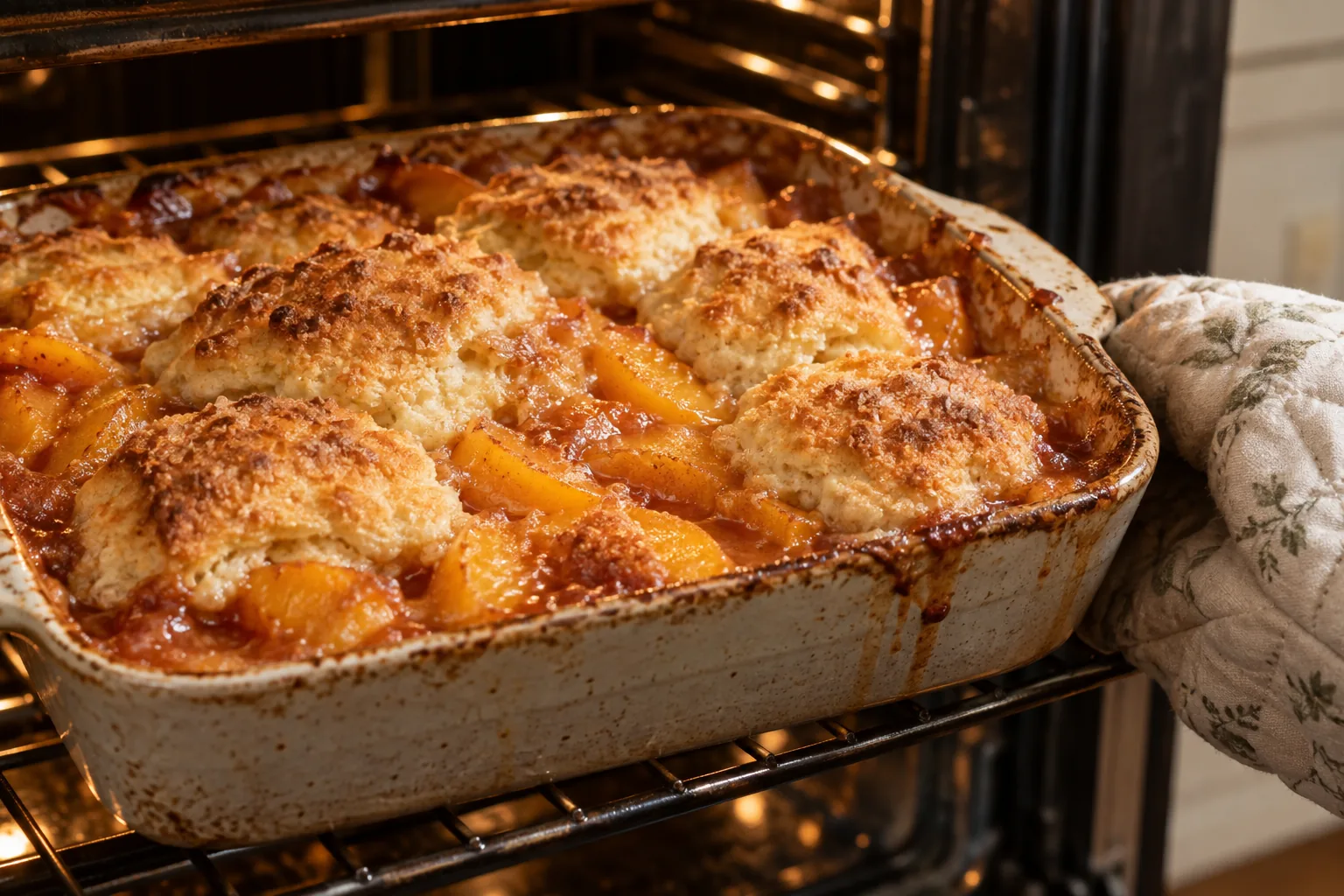
Bake at 375°F for 40 to 45 minutes. Deep golden topping is only one signal: thick fruit bubbles must appear around the edges and through at least one center gap. Center bubbling shows the cornstarch has reached the temperature needed to thicken. If the top browns early, tent loosely with foil and continue baking.
Insert a toothpick into the thickest topping; it should emerge without wet dough. Let the cobbler rest for at least 20 minutes. Fresh from the oven, the syrup is thin and dangerously hot. During the rest it settles into a spoonable sauce while the biscuit topping firms.
What to Watch For
A watery cobbler is usually underbaked, cut too soon, or made with unusually juicy fruit without enough starch. A gummy filling means cornstarch was unevenly mixed or excessive. Tough topping comes from warm butter or too much stirring. If the bottom of the biscuits remains raw, the filling did not become hot enough in the center.
Ovens and dishes vary, so use time as a guide. Glass lets you see edge bubbling; ceramic holds heat longer; dark metal browns faster. The aroma should be fruity and toasted rather than floury.
Serving Ideas
Spoon warm cobbler into shallow bowls with vanilla ice cream, lightly whipped cream, or cold pouring cream. It is equally pleasant at room temperature with coffee. Keep portions modest after a rich supper, but include both syrupy fruit and golden topping in every serving.
Make It Your Own
Add blueberries or blackberries in place of up to two cups of peaches, or replace cinnamon with ginger or cardamom. A handful of chopped pecans can be scattered over the topping. Berries release abundant liquid, so add another teaspoon of cornstarch when using them.
Make-Ahead and Storage
Prepare the dry topping mixture one day ahead and refrigerate it; cut in butter and add buttermilk shortly before baking. The filling is best mixed just before assembly. Refrigerate cooled leftovers, covered, for up to four days. Reheat uncovered at 350°F for 15 to 20 minutes to revive the topping. The microwave is faster but makes it soft.
Freezing a fully baked cobbler is possible for up to two months, though peaches soften after thawing. Cool completely, wrap well, thaw overnight in the refrigerator, and reheat uncovered. For the finest contrast between fruit and topping, fresh or next-day cobbler remains best.
Jump-to-Recipe Card
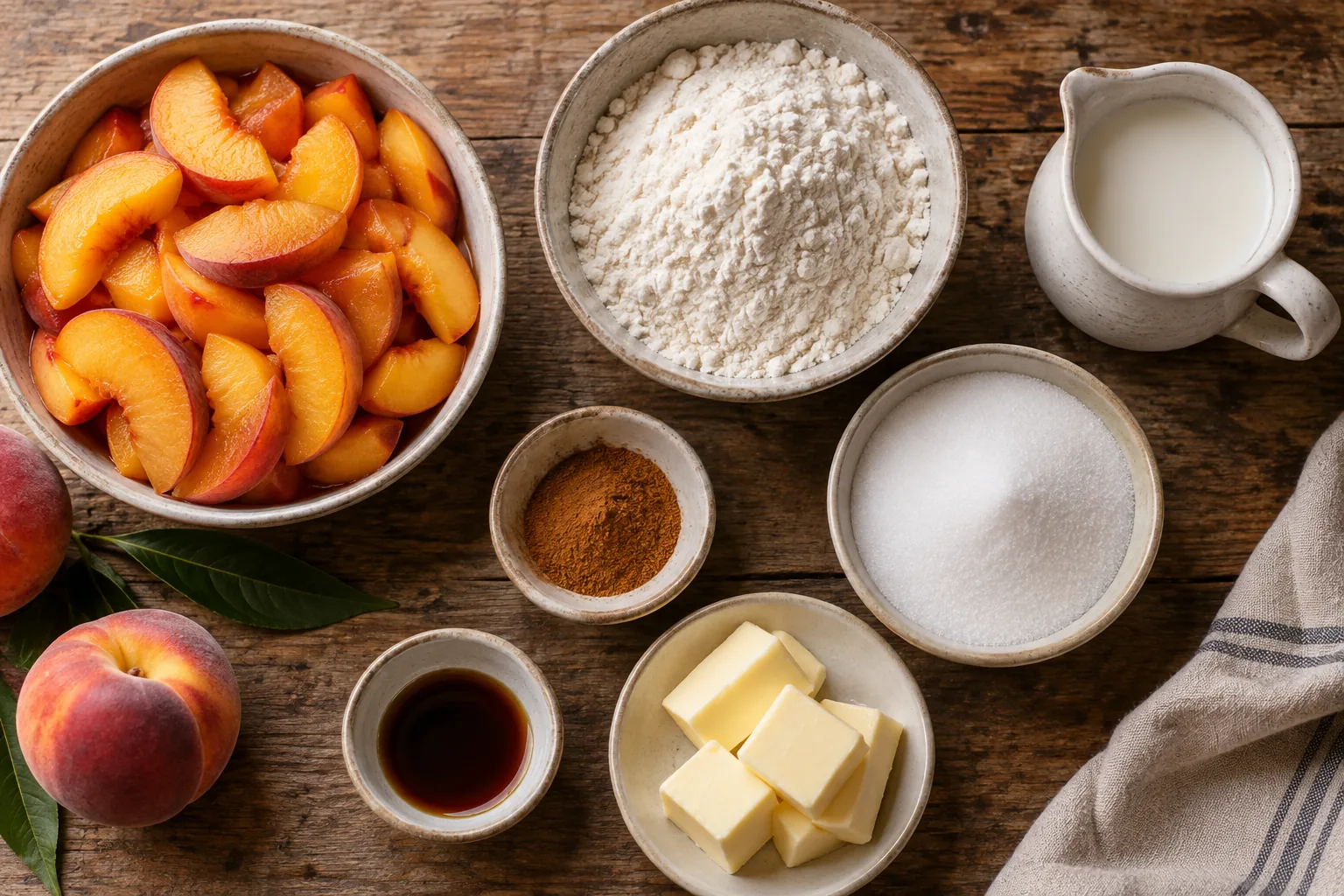
Ingredients
- 6 cups sliced ripe peaches
- 3/4 cup granulated sugar
- 2 tablespoons lemon juice
- 1 teaspoon cinnamon
- 2 tablespoons cornstarch
- 1 teaspoon vanilla extract
- 1 cup all-purpose flour
- 1 1/2 teaspoons baking powder
- 6 tablespoons very cold unsalted butter, cubed
- 3/4 cup cold buttermilk, plus more for brushing
- 1/2 teaspoon salt, divided
Instructions
- Heat oven to 375°F and butter a 3-quart baking dish. Set it on a rimmed sheet pan.
- Toss peaches with sugar, lemon juice, cinnamon, cornstarch, vanilla, and half the salt. Spread in the dish with all juices.
- Whisk flour, baking powder, remaining salt, and 2 tablespoons sugar. Cut in cold butter, then fold in buttermilk just until a shaggy dough forms.
- Drop topping in rough spoonfuls over peaches, leaving small gaps. Brush lightly with buttermilk.
- Bake 40 to 45 minutes until deeply golden and thick fruit bubbles appear near the center.
- Rest at least 20 minutes before serving 8 portions.
Calculate
Calculate
Calculate
Calculate
Nutrition values should be calculated from the final tested recipe quantities before publication.