Why Pecan Pie Belongs on a Southern Table
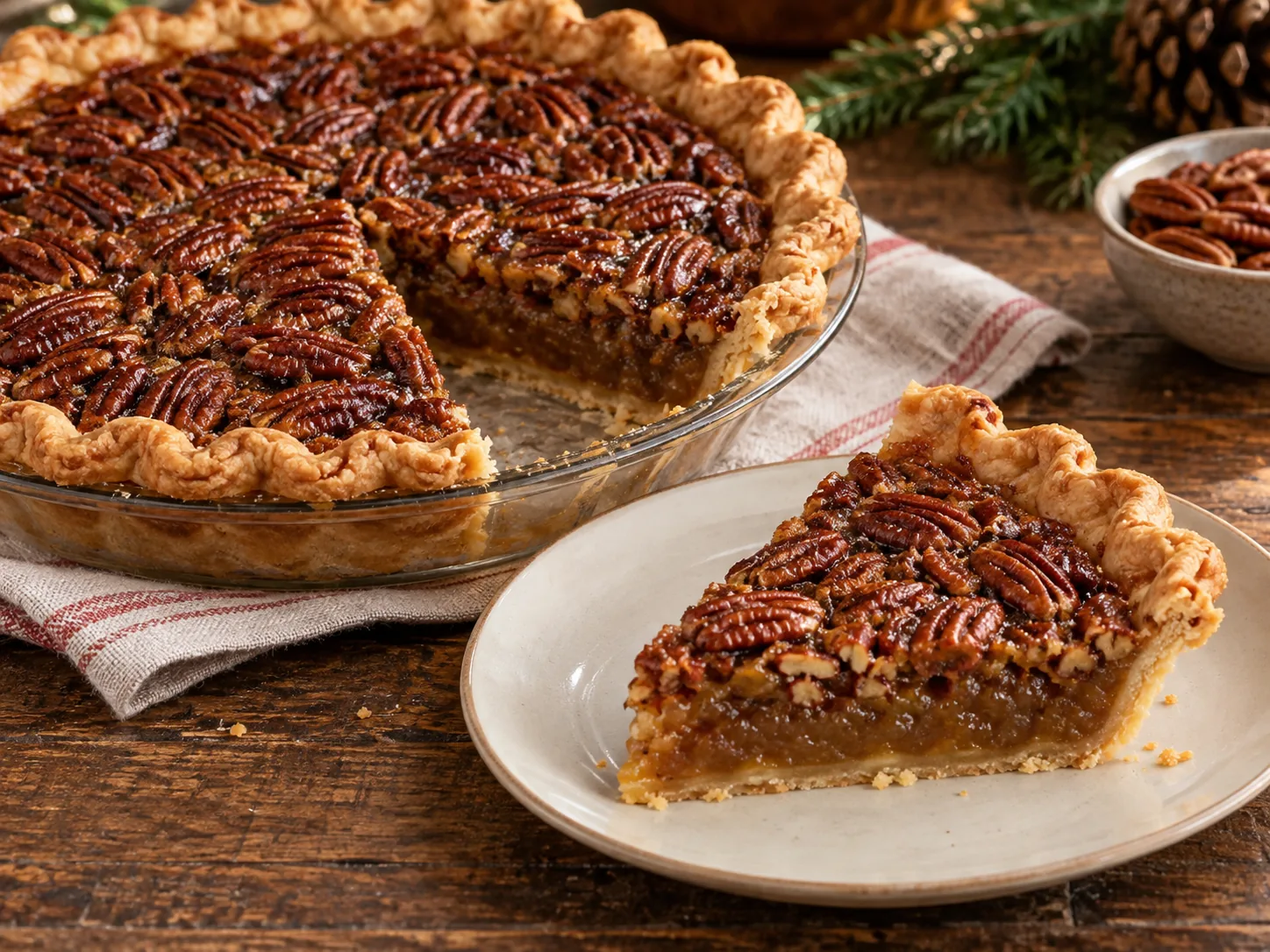
Pecan pie brings together two distinctly satisfying textures: toasted nuts form a crisp, fragrant layer while the filling underneath sets into a soft caramel-like custard. It is rich enough that a slender slice feels generous, which is one reason it works so well at Thanksgiving, Christmas, church suppers, and other tables filled with several desserts.
The pie uses pantry ingredients, yet good technique makes a noticeable difference. Toasting the pecans deepens their flavor, a chilled crust protects the flaky layers, and patient cooling transforms a trembling hot filling into neat slices. The goal is a center that holds its shape without becoming hard or candy-like.
Why This Filling Sets
Eggs provide the structure. Corn syrup and brown sugar supply sweetness and keep the filling smooth, while butter rounds out the flavor. As the pie heats, the egg proteins gradually set around the syrup. If it is removed too soon, the middle remains runny; if baked until completely rigid, the cooled filling becomes tough.
Mix gently rather than whipping. Excess air creates foam that can bake into a pale, uneven surface. The butter should be melted but no longer hot before it meets the eggs. A spoonful of vanilla and a measured amount of salt keep the sweetness from tasting one-dimensional.
Choosing and Toasting Pecans
Fresh pecans should smell sweet and nutty, never like old oil or paint. Store them in the refrigerator or freezer because their natural oils turn rancid more quickly at room temperature. Pecan halves make the most attractive surface, while roughly chopped nuts make the pie easier to slice. Using some of each gives both beauty and even distribution.
Toast the nuts on a sheet pan at 325°F for 6 to 8 minutes, just until fragrant, then cool them completely. They will continue browning during the pie’s long bake, so do not take them dark at this stage. Cooling prevents warm nuts from heating the raw eggs prematurely.
Preparing the Crust
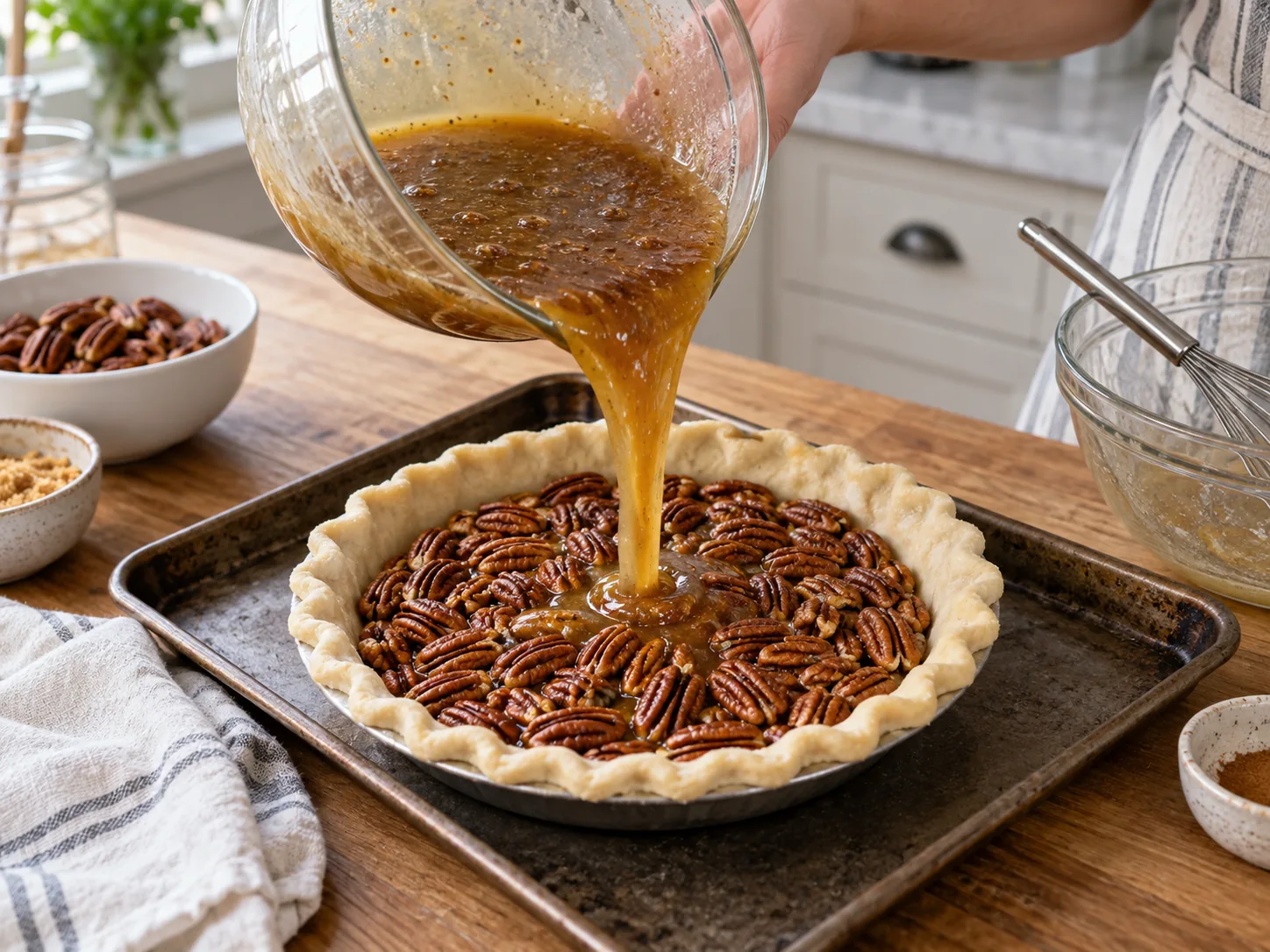
Fit the pastry into a 9-inch pie plate without stretching it, trim the overhang, and crimp the edge. Chill the shaped shell at least 20 minutes. Set it on a rimmed baking sheet before adding the filling; this makes the liquid pie safer to transfer and catches any bubbling syrup.
A glass plate lets you check bottom browning, while a metal plate conducts heat efficiently. Place the pie in the lower third of the oven. If your oven tends to leave pale bottoms, preheat a heavy sheet pan and place the pie’s baking sheet directly on it.
What to Watch For
After about 35 minutes, check the crust and pecans. Cover the rim loosely with foil if it is already deep gold. The finished pie should be set around the outer two inches while the center moves as one soft circle when nudged. A liquid ripple needs more time; a completely motionless center may be overbaked.
For extra confidence, the center should register approximately 200°F on an instant-read thermometer. Cool the pie on a rack for at least three hours. Cutting sooner releases hot syrup and makes even a properly baked pie appear underdone.
Ingredient Notes and Substitutions
Corn syrup: Light corn syrup provides predictable texture and a neutral flavor. Dark syrup creates a more robust molasses note. Brown sugar: Light brown sugar keeps the caramel flavor balanced; dark brown sugar makes it deeper. Bourbon: One tablespoon is optional and complements vanilla and pecans without making the pie taste alcoholic.
Serving Ideas
Serve pecan pie at room temperature for the cleanest balance of crisp nuts and soft filling. Unsweetened whipped cream or vanilla ice cream tempers its richness. Coffee pairs especially well with the toasted pecans. Warm individual slices briefly rather than reheating the whole pie repeatedly.
Make It Your Own
Add orange zest, replace the cinnamon with a pinch of nutmeg, or stir in a tablespoon of bourbon. For chocolate pecan pie, scatter 1/2 cup bittersweet chocolate chips beneath the nuts. Keep the base liquid quantities unchanged so the custard still sets reliably.
Common Pecan Pie Problems
Runny center: the pie was removed before the center reached setting temperature or was sliced warm. Hard filling: it baked too long. Burned pecans: the surface needed loose foil during the final portion of baking. Soggy bottom: the crust was warm going into the oven or baked too high above the bottom heat.
Make-Ahead and Storage
Bake the pie one day ahead, cool it fully, and refrigerate it covered. It keeps for up to four days. Bring it toward room temperature before serving. Well-wrapped slices can be frozen for up to two months and thawed overnight in the refrigerator.
Jump-to-Recipe Card
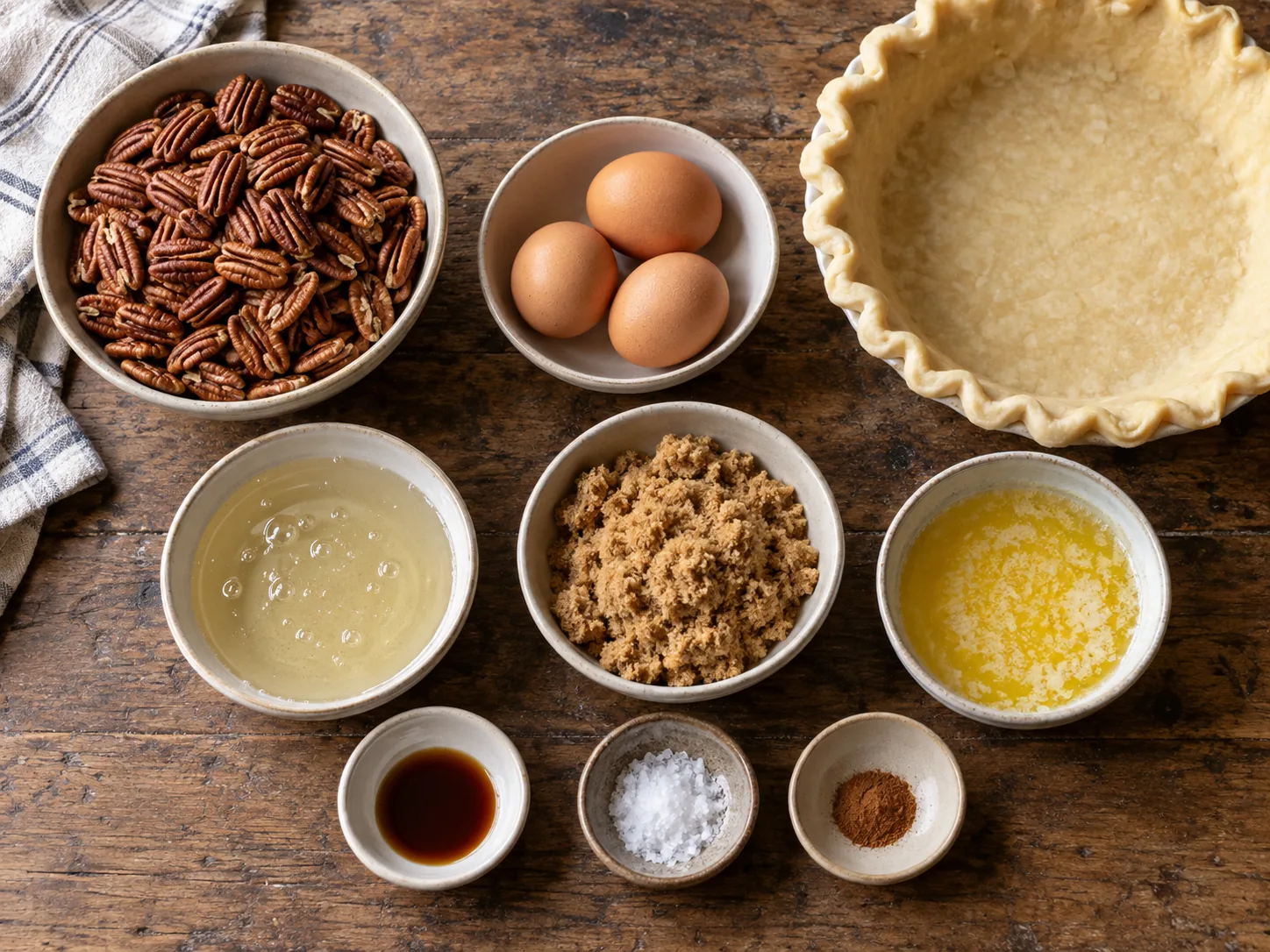
Ingredients
- 1 unbaked 9-inch pie crust, chilled
- 1 3/4 cups pecan halves, lightly toasted and cooled
- 3 large eggs, at room temperature
- 1 cup light corn syrup
- 3/4 cup packed light brown sugar
- 4 tablespoons unsalted butter, melted and cooled
- 1 teaspoon vanilla extract
- 1/2 teaspoon kosher salt
- 1/4 teaspoon ground cinnamon
- 1 tablespoon bourbon, optional
Instructions
- Heat the oven to 350°F with a rack in the lower third. Place the chilled pie shell on a rimmed baking sheet.
- If needed, toast pecans at 325°F for 6 to 8 minutes until fragrant, then cool completely. Roughly chop one cup and reserve attractive halves for the top.
- Whisk the eggs gently until blended. Add corn syrup, brown sugar, cooled butter, vanilla, salt, cinnamon, and bourbon; whisk without creating foam.
- Scatter the chopped pecans in the crust. Pour in the filling, then arrange the reserved halves across the surface.
- Bake 50 to 60 minutes. Shield the crust edge and surface loosely if they brown early. The outer filling should be set and the center should softly tremble as one unit.
- Cool on a rack for at least 3 hours before slicing so the filling can finish setting.
Calculate
Calculate
Calculate
Calculate
Nutrition values should be calculated from the final tested recipe quantities before publication.