Why Homemade Biscuits Turn Out Dense: A Practical Fix-It Guide
Troubleshoot dry, flat, tough, or uneven homemade biscuits with a simple diagnosis, ingredient tips, and a tested workflow for a lighter bake.
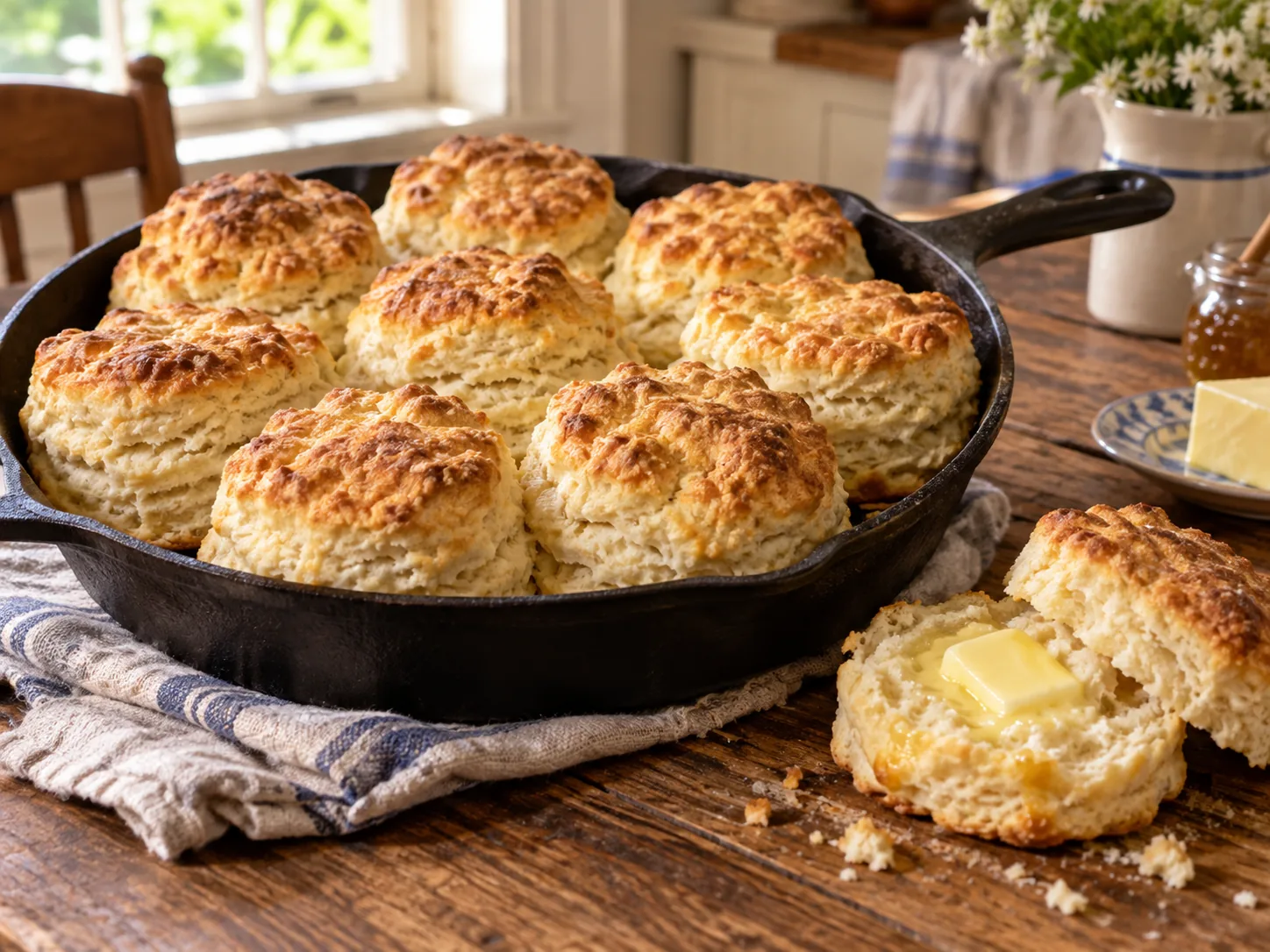
The food pictures here are AI illustrations.
A good Southern-style biscuit should be tender inside, with enough structure to split and a top that turns golden in the oven. When the batch comes out heavy, the problem is usually not one secret ingredient. It is more often a combination of measuring, temperature, handling, and oven heat.
Start with the result you see
Dense and compact
Check how you measured the flour and how much the dough was mixed. Packing flour into a measuring cup can produce more flour than the recipe needs. Stirring until the dough is completely smooth can make the texture chewier.
Flat and spread out
Look at your baking powder or self-rising flour first. Check its date and whether it has been stored dry. If the butter warmed while you worked, chill the shaped biscuits briefly before baking.
Dry or crumbly
Too much flour or too little buttermilk can leave the dough unable to hold together. Add liquid gradually, stopping when the flour is just moistened. A slightly shaggy dough is often better than a perfect-looking ball.
Dark bottom, pale top
Move the baking sheet closer to the center of the oven and check the pan material. Very dark pans may brown the bottoms more quickly. An oven thermometer helps uncover temperature differences.
Measure flour before you mix
Flour becomes compacted in a bag or container. If using cups, loosen it with a spoon, spoon it lightly into the cup, then level the top without tapping the cup. A kitchen scale is more repeatable. Use the flour type the recipe specifies: all-purpose flour and self-rising flour are not interchangeable unless you also adjust the leavening and salt.
Read the whole ingredient list before substituting. Buttermilk contributes moisture and acidity, while cold fat contributes tenderness. Substitutions change more than flavor, so test one change at a time rather than switching several ingredients in one batch.
Keep the fat cold and easy to see
Cold butter is easier to distribute in small pieces. Those little pieces help create texture as the biscuits bake. Cut the butter into cubes and return it to the refrigerator if the kitchen is hot. A pastry cutter, fork, or fingertips can work; stop when you see a mixture of small flakes and pea-size pieces rather than uniform fine crumbs.
After adding buttermilk, mix only until the dry flour is moistened. Small dry-looking patches can be incorporated during folding. Aggressive kneading may yield a biscuit that feels more like bread.
Shape with a light touch
Turn the dough onto a lightly floured surface, pat it into a rectangle, and fold it over itself a few times only if the recipe calls for folding. Pat rather than press it hard with a rolling pin. When using a cutter, push straight down and lift; twisting can seal the edges and may limit an even rise.
Place the cut biscuits according to the recipe. Biscuits baked touching can support each other as they rise and have softer sides; spaced biscuits usually develop more crust. Neither is automatically wrong, the best choice depends on the style you want.
Preheat the oven completely
Biscuits need enough heat to begin rising promptly. Preheat for the full time, not just until the oven displays the requested number. If baking in a cast-iron skillet, follow the recipe’s directions for whether the skillet should be preheated. Check several minutes before the stated finish time because thickness and ovens vary.
A simple plan for your next batch
- Read the recipe and measure ingredients before starting.
- Check the leavening date, then chill the butter.
- Mix dry ingredients evenly before adding fat and liquid.
- Stop handling the dough as soon as it holds together.
- Cut cleanly, bake in a fully heated oven, and record the actual bake time.
Try next: compare these notes with our step-by-step buttermilk biscuit recipe. Change one variable per batch; your notes will be more helpful than chasing a new trick every time.
Brenda’s Family is Brenda Gantt’s official website for her fans. Recipe instructions and images may be adaptations or illustrations. Read our editorial and advertising disclosure.