Why Cornbread Belongs on a Southern Table
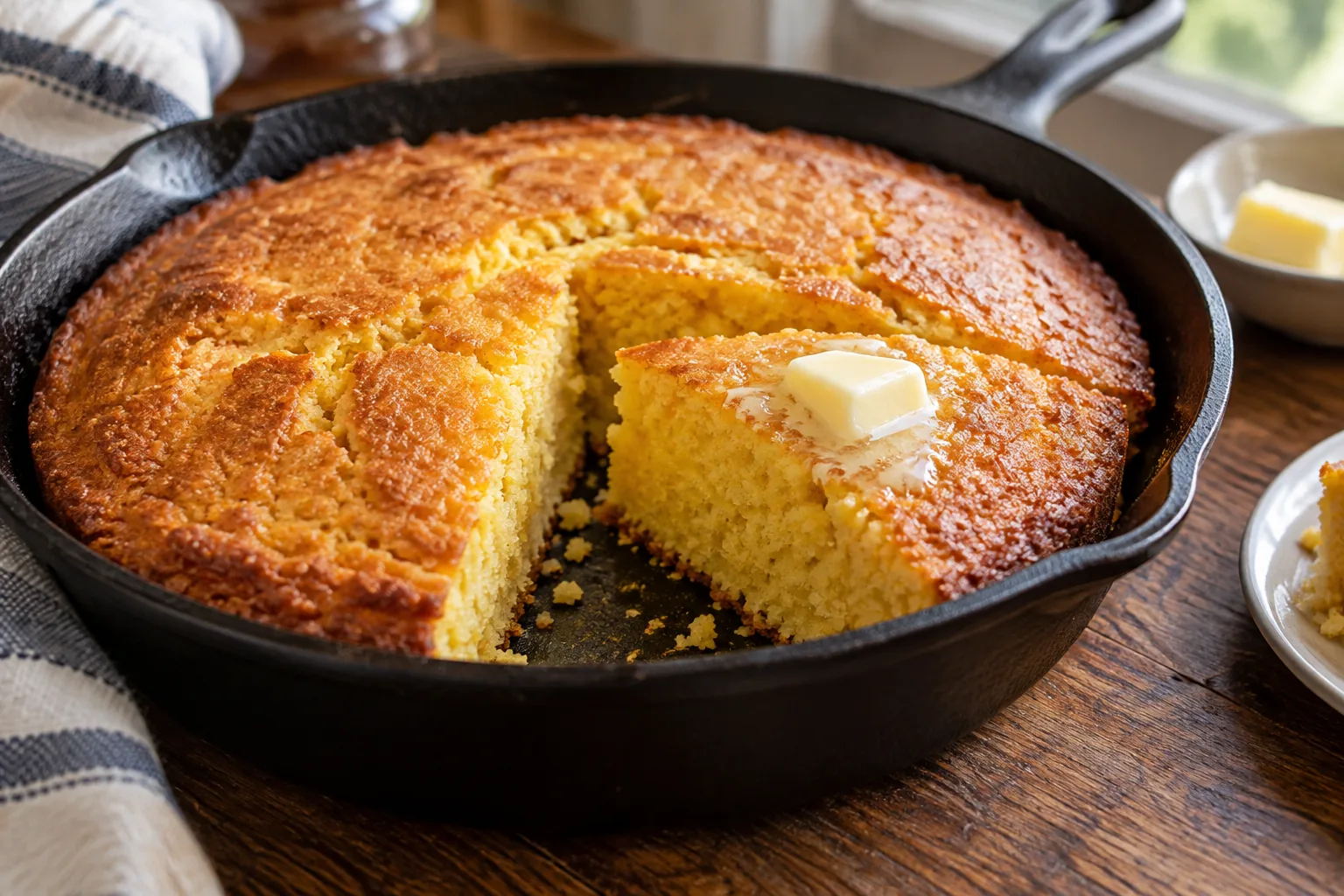
Cornbread can be savory and crisp, soft and lightly sweet, or anywhere between. This version is the tender family-style kind: equal parts cornmeal and flour, cultured buttermilk, melted butter, and a modest spoonful of honey. It bakes in an 8-inch square pan, making it distinct from our more traditional, savory Skillet Cornbread recipe.
This is an independent Southern-inspired Gantt Fans recipe, not an official Brenda Gantt recipe. Its balanced crumb is easy to cut into squares and works beside supper as well as at breakfast.
What Makes This Version Different
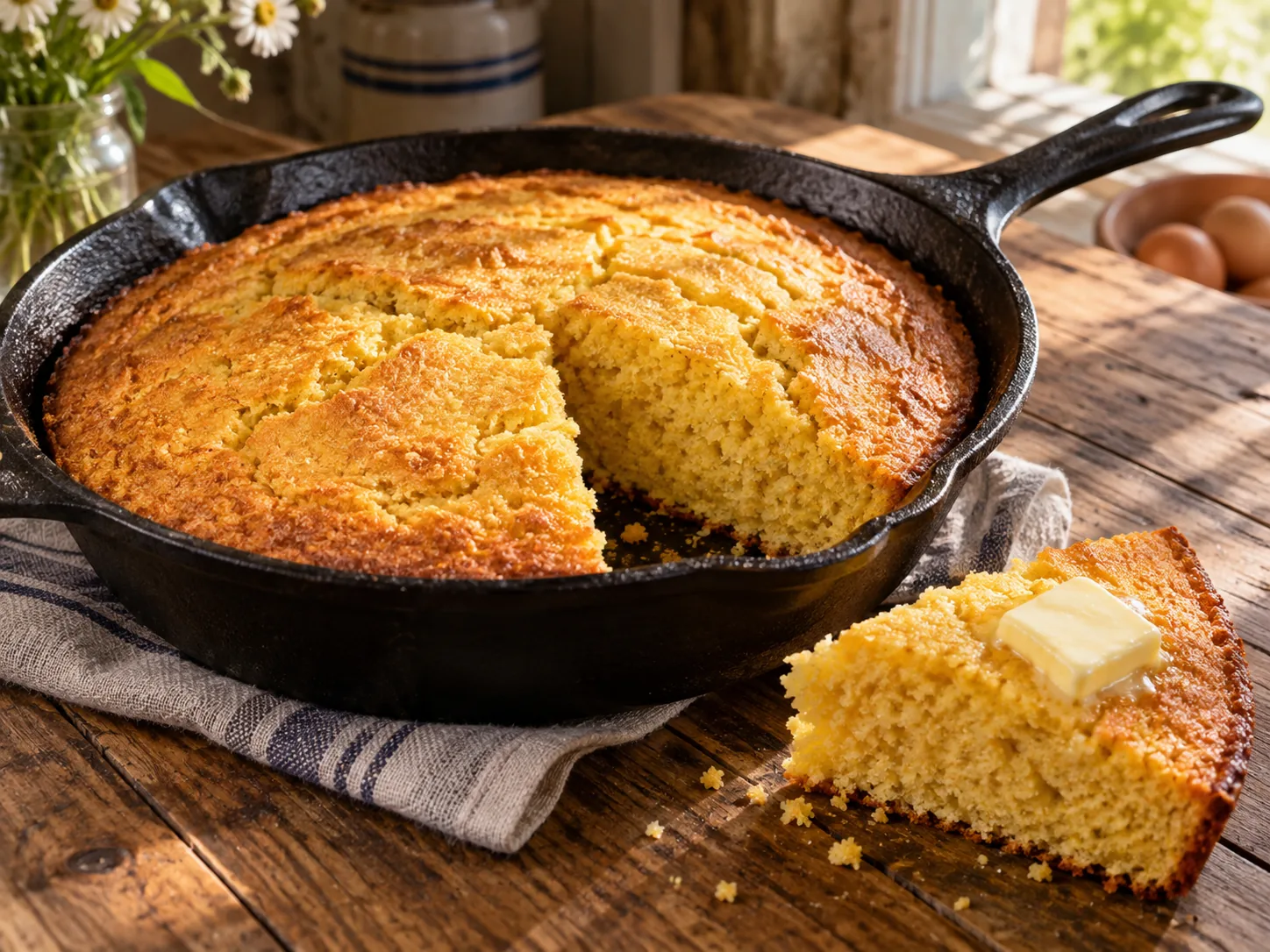
Recipe 29 emphasizes a hot cast-iron skillet, a pronounced crisp edge, and no sweetener. Here, flour softens cornmeal's rustic bite and honey rounds its flavor without turning it into dessert. The square pan gives more consistent softness from center to edge. Readers can choose between the two according to the meal and their household tradition.
Yellow cornmeal provides color and recognizable corn flavor. A medium or fine grind works best for a tender loaf; coarse stone-ground meal needs more hydration and can feel gritty. Store whole-grain cornmeal cold because its natural oils become stale faster than refined meal.
Buttermilk, Butter, and Honey
Buttermilk's acidity balances honey and reacts with baking soda for lift. Its thicker body hydrates cornmeal while keeping the batter cohesive. Melted butter adds flavor and tenderness. Let it cool until warm before combining with cold dairy so it does not seize into hard flecks or cook the egg.
Two tablespoons honey give a restrained sweetness. Measure it after lightly oiling the spoon so it slides out cleanly. Granulated sugar can replace it, but honey holds moisture and gives the crust a deeper color. Do not increase it substantially without adjusting the liquid because excess sugar makes the center gummy.
Measure and Mix With Restraint
Spoon flour and cornmeal into their cups and level them; scooping directly compacts dry ingredients and creates a dry loaf. Whisk cornmeal, flour, baking powder, baking soda, and salt thoroughly. In a separate bowl combine egg, buttermilk, warm melted butter, and honey until uniform.
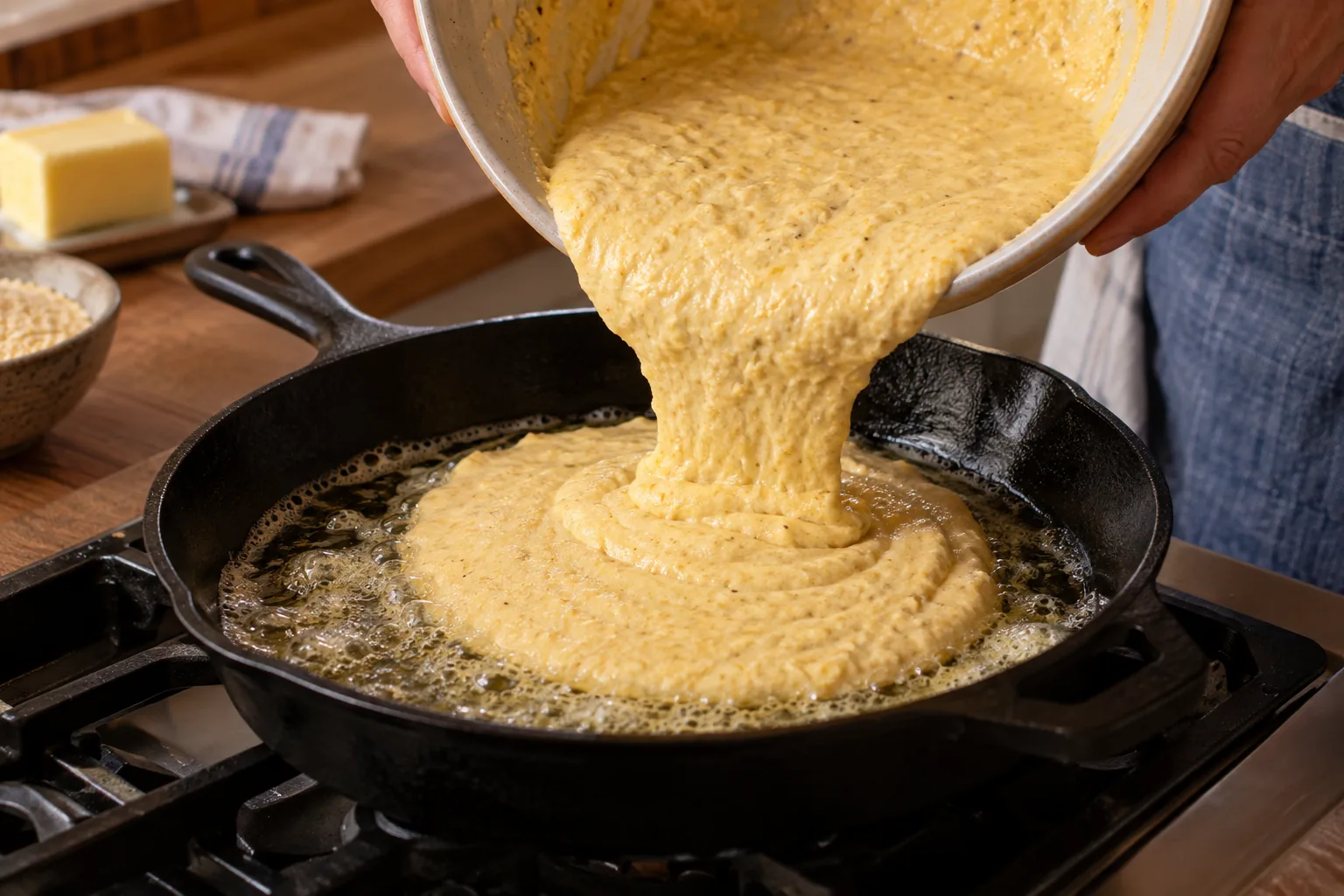
Pour wet into dry and fold only until no large flour pockets remain. A few small lumps are better than a perfectly smooth, overmixed batter. Once buttermilk activates the leaveners, work promptly: spread the batter in the prepared pan and move it into the fully heated oven.
Prepare the Pan for Easy Release
Butter an 8-inch square light-metal pan and line the bottom with parchment for dependable removal. Glass can be used but holds heat longer; reduce the oven temperature by 25 degrees and expect a slightly softer crust. A 9-inch pan makes thinner bread and may finish several minutes earlier.
Spread the batter evenly without repeatedly smoothing it. A slight dip in the center is useful because the middle naturally rises more. Bake on the center rack where heat can circulate evenly.
Know When Cornbread Is Done
At 375°F, begin checking around 24 minutes. The surface should be golden, the center should spring back lightly, and a tester should show a few moist crumbs but no wet batter. The edges may pull from the pan slightly. An internal temperature near 195°F to 200°F confirms the crumb has set.
Cool in the pan for ten minutes, then lift onto a rack or board. Cutting immediately compresses the hot crumb and releases steam needed for moisture. After the brief rest, use a serrated knife and gentle sawing motion to create nine clean squares.
What to Watch For
Dry cornbread usually means too much flour, too little buttermilk, or overbaking. A dense strip at the bottom points to expired leavener or batter that waited too long. A peaked, cracked center may mean the oven runs hot. Gummy crumb is generally underbaked or cut while steaming hot.
If cornmeal is especially absorbent, let the mixed batter stand three minutes and check it. It should be thick but spreadable. Fold in one or two tablespoons of buttermilk if it looks stiff and dry.
Serving Ideas
Serve warm squares with chili, beans, vegetable soup, greens, pulled pork, fried chicken, or roast chicken. At breakfast, split and toast a square, then add butter, preserves, or honey. Slight sweetness makes this version especially friendly with spicy food.
Make It Your Own
Fold in one cup of grated cheddar, drained corn, blueberries, or finely diced jalapeño. Keep wet add-ins dry and do not exceed about one cup total. Scallions and cracked pepper create a savory version; orange zest and blueberries lean toward breakfast. For a truly unsweetened crisp skillet style, use the separate recipe designed for that method.
Storage and Reheating
Cool fully before storing airtight at room temperature for two days or refrigerating for up to five. Reheat uncovered at 350°F for 8 to 10 minutes, or toast split squares in a skillet. A microwave warms quickly but softens the edges.
Freeze individual squares for up to three months. Wrap tightly, thaw at room temperature, and refresh in the oven. Dry leftovers make excellent cornbread crumbs or dressing, so nothing needs to go to waste.
Jump-to-Recipe Card
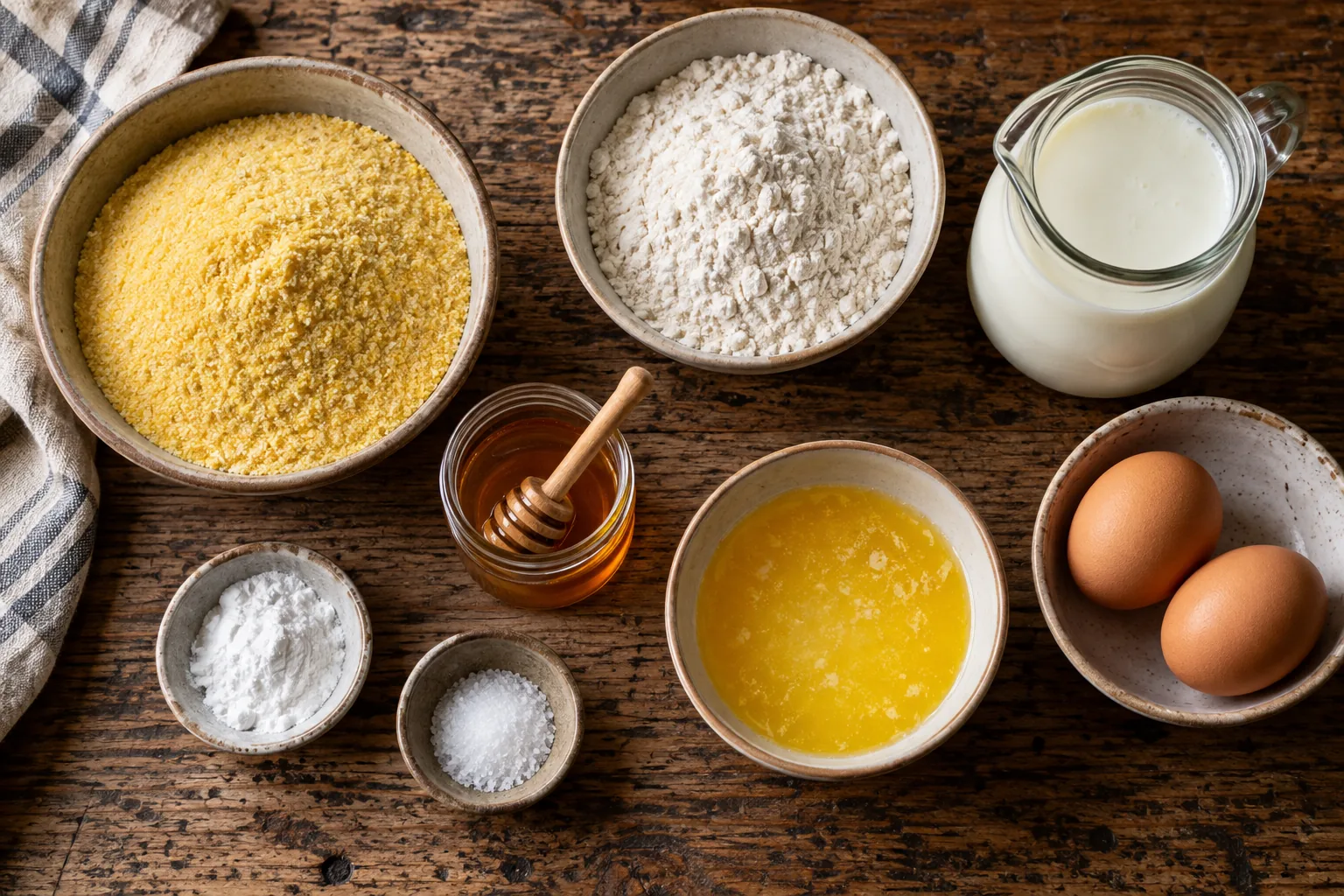
Ingredients
- 1 cup yellow cornmeal
- 1 cup all-purpose flour
- 1 tablespoon baking powder
- 1/2 teaspoon salt
- 1/2 teaspoon baking soda
- 1 large egg, room temperature
- 1 1/4 cups cultured buttermilk
- 1/3 cup unsalted butter, melted and cooled
- 2 tablespoons honey
Instructions
- Heat oven to 375°F. Butter and line an 8-inch square baking pan.
- Whisk cornmeal, flour, baking powder, baking soda, and salt thoroughly.
- Whisk egg, buttermilk, cooled melted butter, and honey separately.
- Fold wet into dry only until no large flour pockets remain; small lumps are fine.
- Spread in the pan and bake 24 to 28 minutes, until golden and a tester has moist crumbs but no batter.
- Cool 10 minutes before cutting into 9 squares.
Calculate
Calculate
Calculate
Calculate
Nutrition values should be calculated from the final tested recipe quantities before publication.