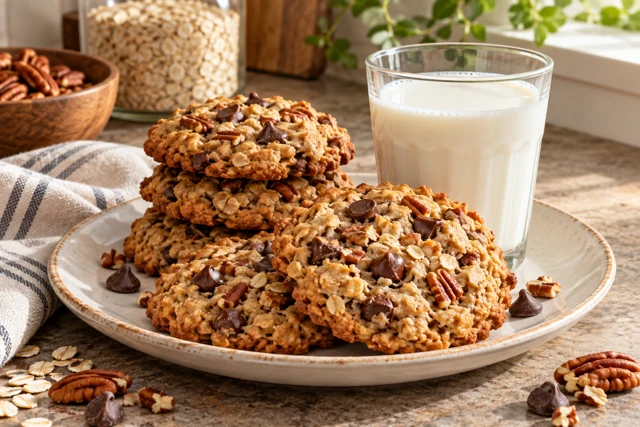
Chocolate Chip Oatmeal Cookies
Chocolate chips, old-fashioned oats, and pecans give these drop cookies a generous, home-baked texture.
View recipe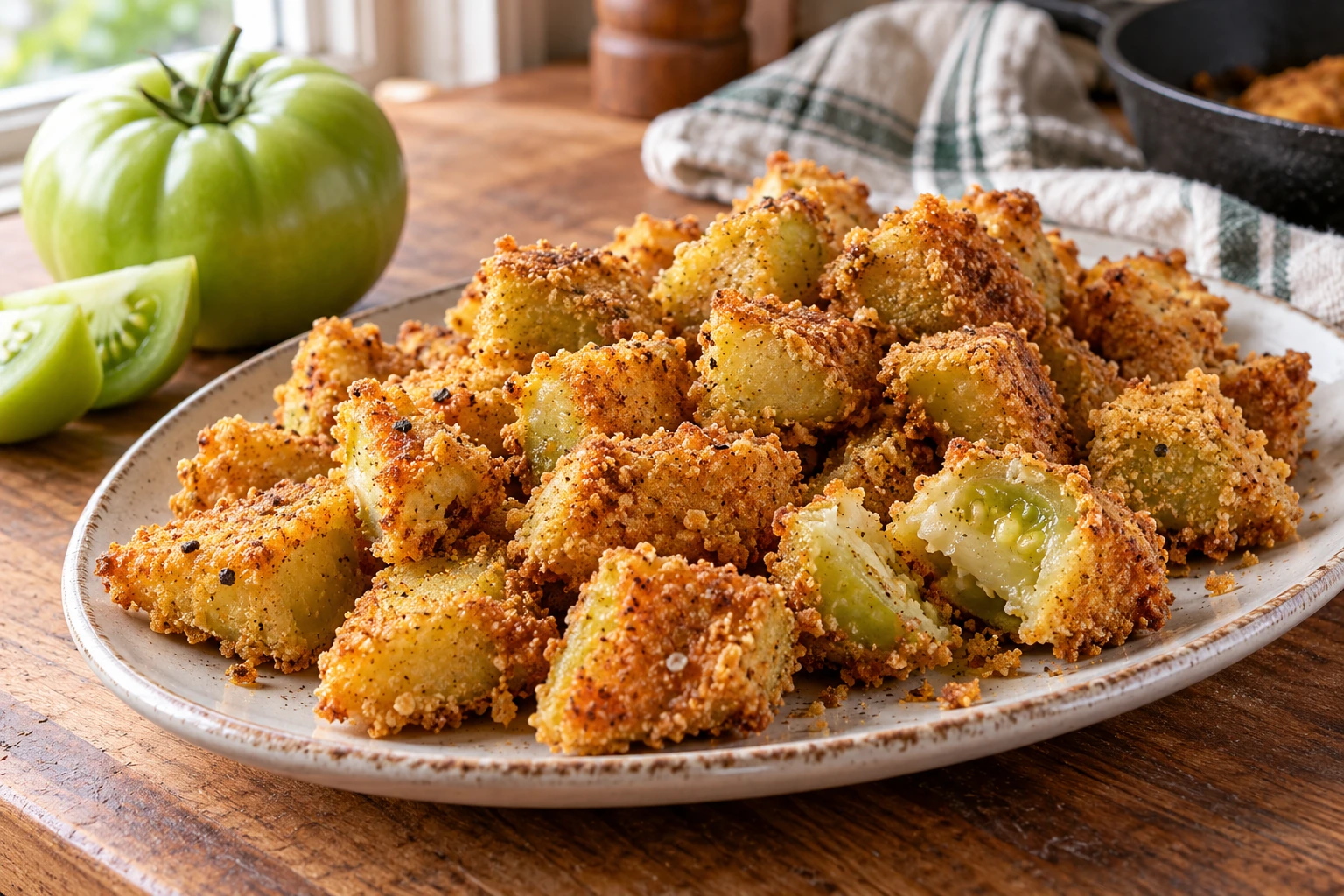
Bite-size green tomato pieces with a crisp cornmeal coating, cooked in small batches and served hot.
A guide adapted from a published recipe. View source & credits.
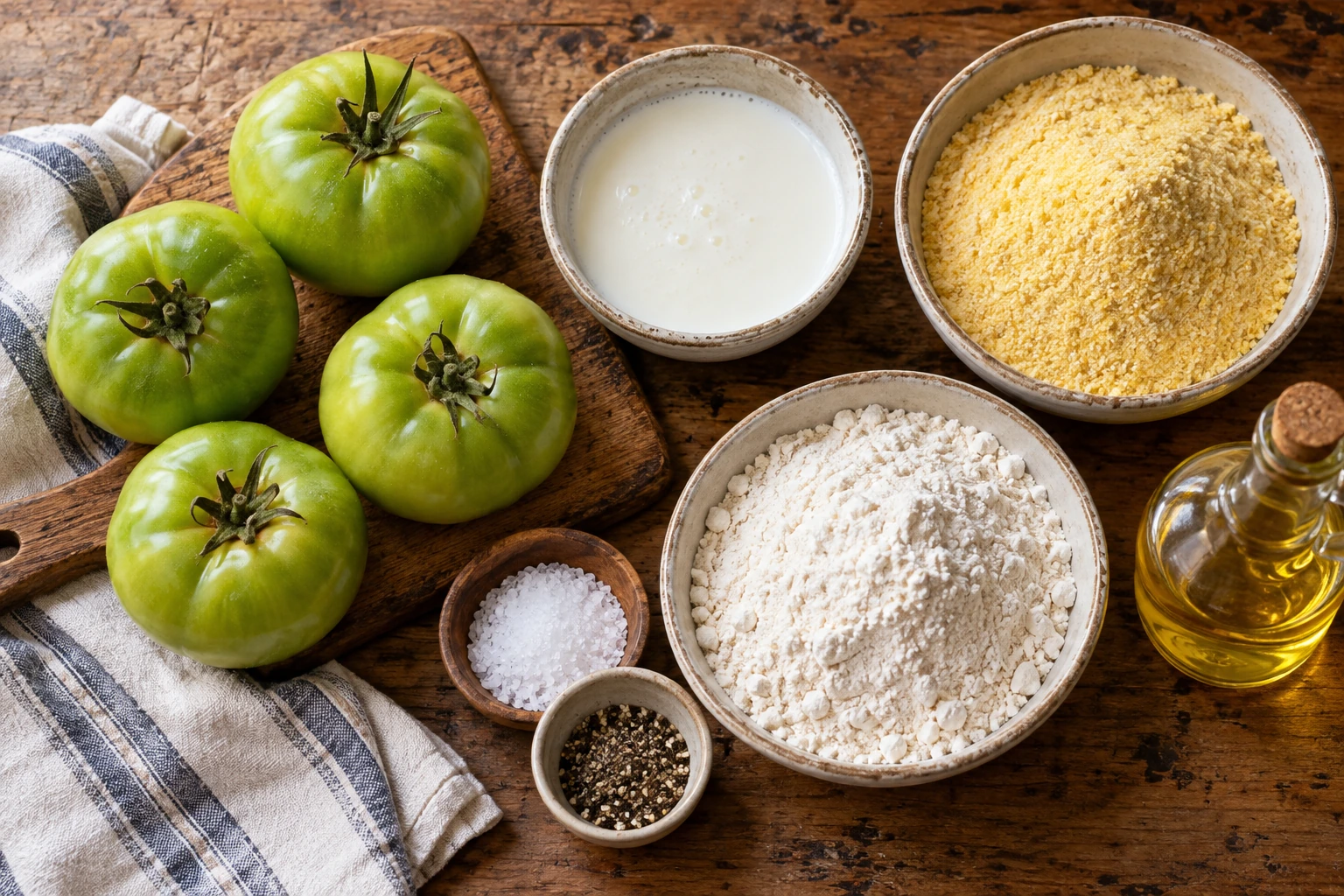
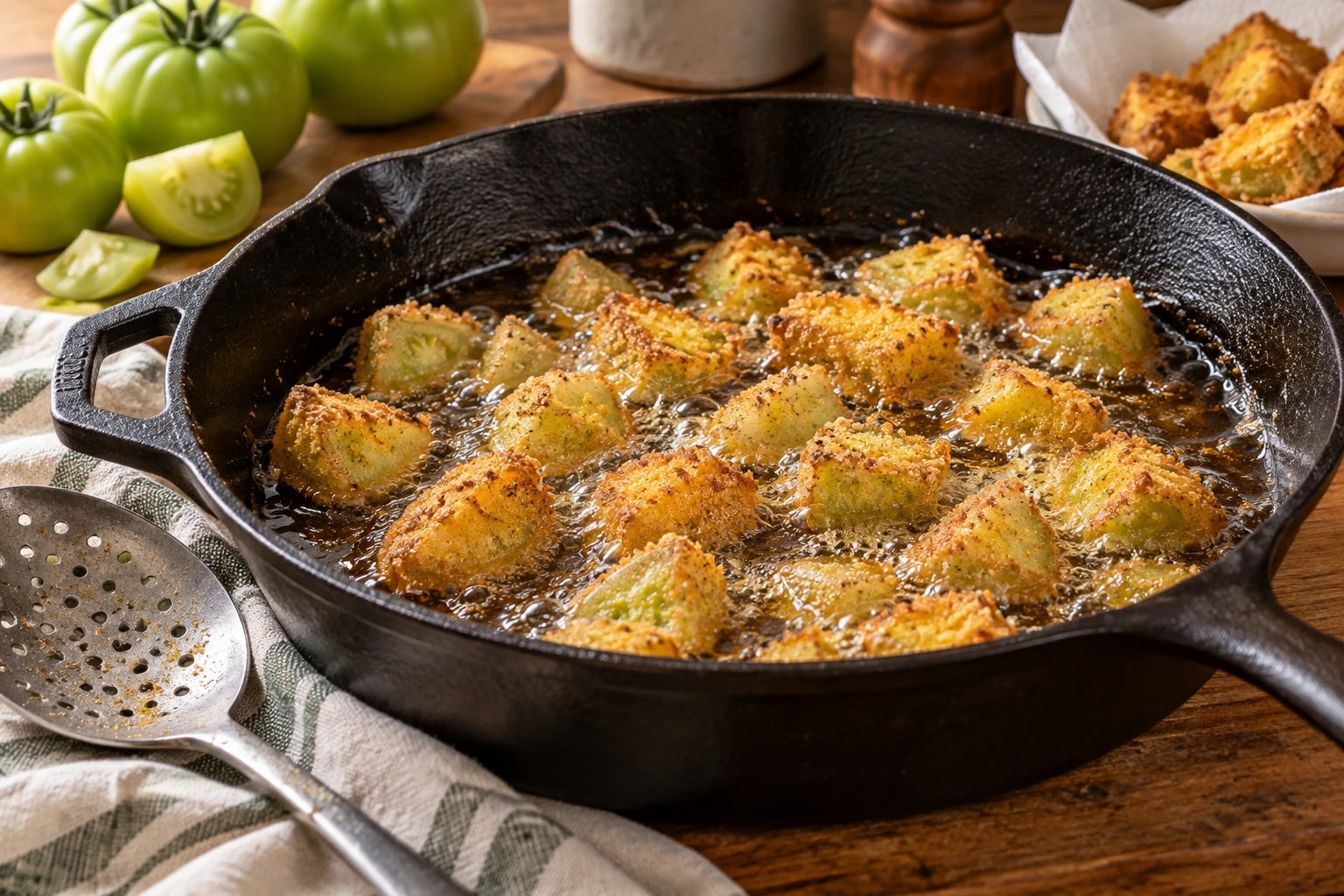
AI-generated illustrations of ingredients, preparation, and the finished dish. Tap any image to view it in full.
This version of fried green tomatoes uses small pieces rather than the familiar thick rounds. The shape gives you plenty of crisp coating around the firm, slightly tart tomato flesh. The finished pieces should look irregular and lightly craggy, not like smooth battered nuggets.
The method is simple, but two details decide the result: the tomatoes must be coated without becoming a wet paste, and the oil needs enough heat to crisp the outside promptly. Work in small batches, prepare a draining area before you start, and plan to serve them close to the time they leave the skillet.
Choose unripe green tomatoes that feel firm when gently pressed. A tomato that is merely a green-colored ripe variety may be softer and juicier. Wash and dry the fruit before cutting, remove the tough stem core, and discard any damaged areas.
Use a deep, heavy skillet, a slotted spoon or spider, a thermometer if available, and a rack set over a tray. Keep the coating bowl nearby but away from the burner. The draining tray should be ready before the first batch enters the oil so you are not searching for equipment while food is frying.
Use unripe tomatoes that resist gentle pressure. Soft ripe tomatoes release much more juice and are harder to keep in small coated pieces.
Let the oil recover its heat between batches. A crowded pan traps steam and loosens the coating. Lower pieces carefully into the oil with a utensil rather than dropping them from a height.
Pat tomato slices dry before dredging and avoid stacking them while coated. Cook in batches to keep the crust crisp.
Bite-size green tomato pieces with a crisp cornmeal coating, cooked in small batches and served hot.
Times and yields are estimates; use the cooking cues in the instructions.
Cut the tomatoes into pieces approximately ½ inch across. They do not need to be perfect cubes, but avoid mixing tiny fragments with large wedges. Similar-sized pieces cook more evenly, and the cornmeal has a better chance to become crisp before the tomato interior turns too soft.
Place the pieces in a large bowl and pour over the ¼ cup buttermilk. Toss gently until the cut surfaces are lightly moistened. There should not be a deep puddle in the bottom. If a tomato has released an unusual amount of juice, tip off excess liquid before proceeding.
Season lightly with salt and black pepper, remembering that self-rising cornmeal already contains salt. Add the cornmeal and flour and turn the pieces over with a spoon. Separate any pieces stuck together so all sides receive some coating. Do not stir so forcefully that the tomatoes break up.
Look for a loose, grainy coating that clings to the tomato surfaces. If it is very wet, add a little extra cornmeal, a spoonful at a time, and toss again. Stop before the bowl becomes mostly dry meal. Shake off loose coating before frying so it does not collect and burn in the oil.
Add oil to a deep skillet without filling it more than about one-third full, leaving plenty of space for bubbling. Heat to approximately 350°F (175°C). A thermometer is more dependable than guessing. If testing with one coated piece, it should sizzle promptly without becoming dark almost immediately.
Lower a small batch carefully into the oil with a utensil. Leave space between the pieces and allow the coating to set briefly before moving them. Turn occasionally and fry until golden and crisp, approximately 4 to 6 minutes per batch depending on size and heat. Adjust the burner to maintain a steady sizzle.
Lift the pieces with a slotted spoon and let excess oil drip back into the skillet before placing them on the rack or paper towels. Keep them in a single layer. Before adding another batch, let the oil return toward 350°F and skim out dark loose crumbs if necessary.
Taste a cooked piece once it has cooled enough to eat and add a small final pinch of salt only if needed. Serve promptly. If you need to hold the first batch briefly, use a rack in a low oven so air can circulate; covering or stacking the pieces traps steam and softens the crust.
The pieces may have been too wet, moved before the coating set, or crowded in the pan. Drain excess moisture before coating, lower the pieces gently, and wait briefly before turning. The coating here is intentionally thin rather than a thick sealed shell.
Oil that is too cool often gives a heavy result. Avoid adding a large cold batch all at once, and allow the temperature to recover. Drain on a rack instead of leaving the cooked pieces sitting in pooled oil.
Lower the heat and check the oil temperature. Tiny tomato pieces and loose crumbs darken faster than larger chunks. If crumbs have blackened, let the oil cool safely and strain or replace it before continuing rather than adding more food to burnt residue.
Serve alongside beans, grilled meat, or a simple sandwich. A small portion of a cool dip can be offered separately, but pourable sauces soften the crust if added in advance. Prepare the tomatoes and measure the coating before the meal, then combine and fry near serving time. Leftovers can be reheated on a rack in the oven, although they will not be quite as delicate as the first batch.
These are best just cooked. Refrigerate leftovers within 2 hours, use within 3 to 4 days, and reheat in a hot oven until crisp and heated through.
No. This version follows Brenda’s published diced-tomato approach, using small chunks rather than rounds.
For the best crust, coat close to frying. Tomato juice gradually hydrates the cornmeal and can make it clump.
Adapted from Brenda Gantt’s recipe published by Birmingham Christian Family. Oil temperature, batch timing, and serving estimate are editorial additions.
Read the published source recipe
Instructions are rewritten for this site and have not yet been kitchen-tested by our team. Technique, storage and serving notes are Brenda’s Family editorial guidance, not quotations from Brenda; ingredient quantities follow the linked source and timings are approximate.
Chocolate chips, old-fashioned oats, and pecans give these drop cookies a generous, home-baked texture.
View recipe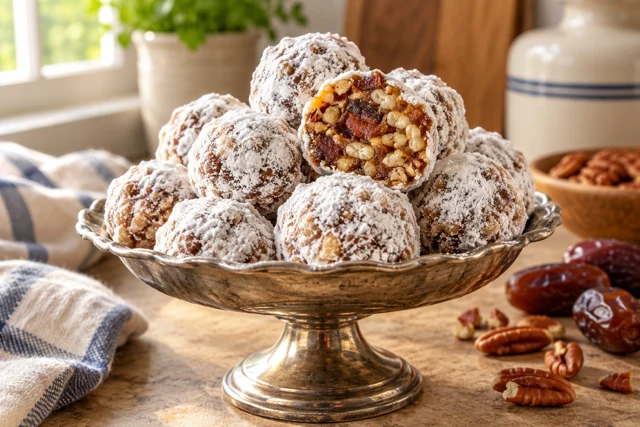
Chewy dates, crisp rice cereal, and finely chopped pecans rolled into small powdered-sugar treats.
View recipe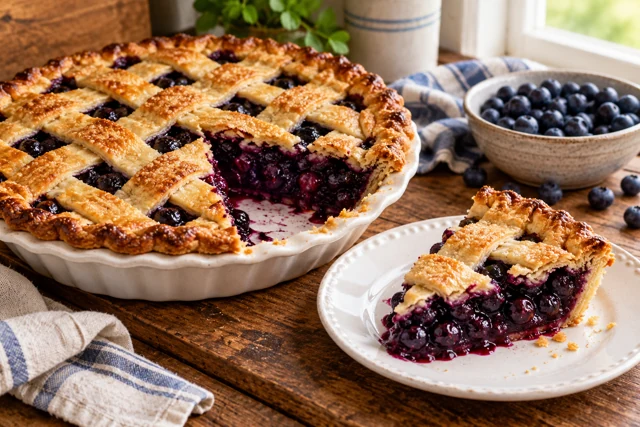
A buttery lattice crust over fresh blueberries, with a bubbling violet filling and a crisp sugared top.
View recipe