A Practical Southern Dinner Planner: Main, Sides, Bread, and Dessert
Build a home-cooked Southern-inspired dinner by choosing a main, one quick side, one make-ahead side, and a dessert without crowding the stove.
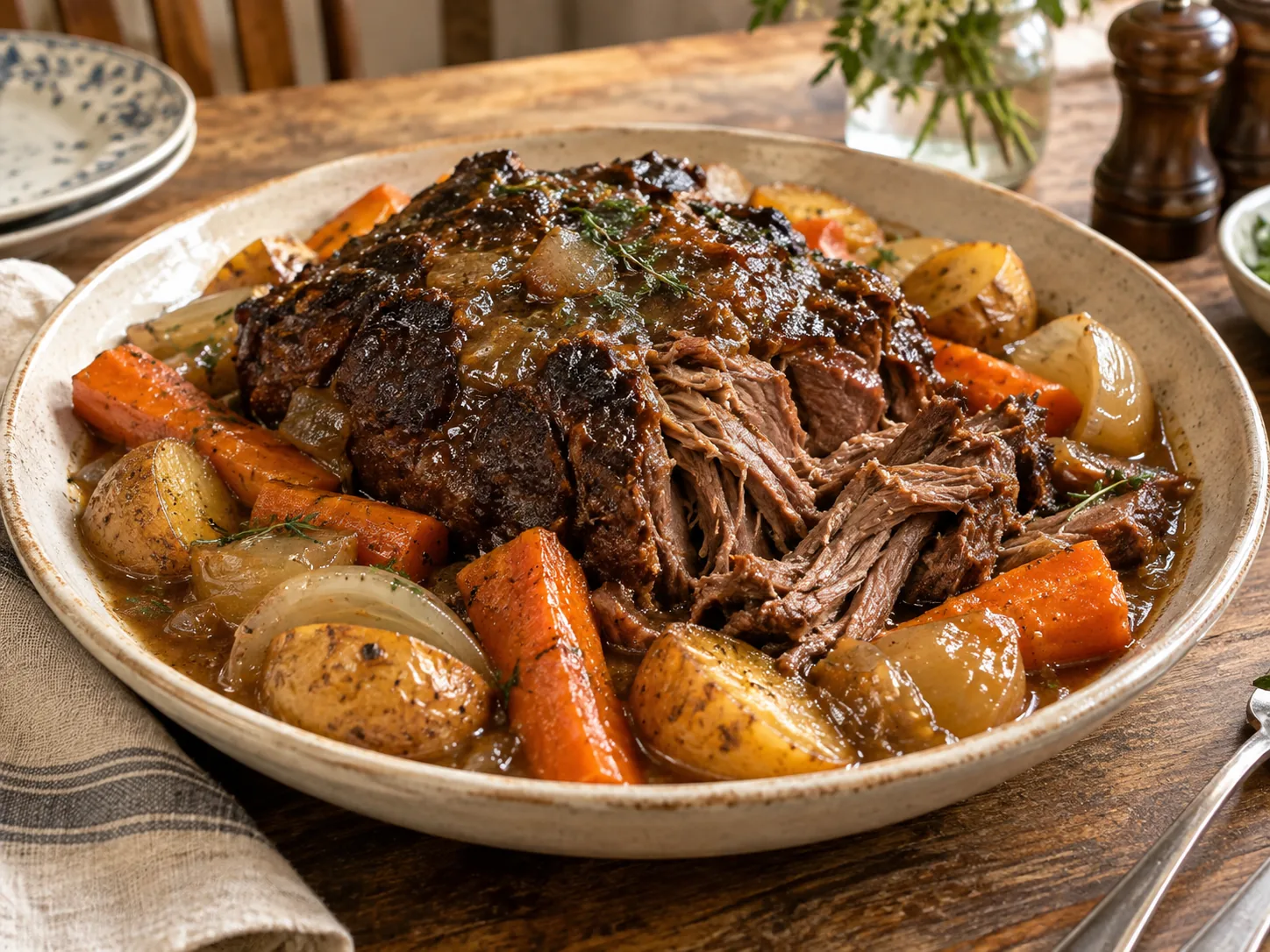
The food pictures here are AI illustrations.
A generous family table does not need six dishes that all demand attention at the same time. The easiest meal starts with one central dish, two supporting sides, and a realistic sequence. Whether you are cooking for a weekday or friends, the plan should fit your stove, oven, budget, and time.
1. Choose the main dish first
Pick a recipe whose cooking method matches the day. Pot roast can anchor a longer, slower dinner, while fried pork chops need more attention immediately before serving. Chicken pot pie can combine a main dish with vegetables in one pan. Read the total time and steps before buying ingredients; a short preparation time does not always mean the food is ready quickly.
2. Balance texture and effort
Choose one vegetable that brings color or freshness and one comforting starch. For example, pair a rich main with crisp coleslaw and mashed potatoes. If the main already includes a thick sauce, a lighter green vegetable can keep the plate from feeling heavy. Avoid planning four fried dishes for the same meal unless you have enough equipment and hands to serve them hot.
Serving guests with dietary needs? Ask about allergies before planning, then read ingredient labels and prevent cross-contact. Do not assume that a vegetable side is automatically vegetarian; broths and seasonings vary.
3. Add bread only if it earns its place
Warm bread is lovely for soaking up sauces, but it competes for oven space. Cornbread works well with beans or greens; buttermilk biscuits make a special addition to brunch or a roast dinner. If time is tight, skip the bread. Guests will remember a relaxed meal more than one extra pan.
4. Choose a dessert you can make early
Banana pudding and lemon icebox pie benefit from advance chilling. Peach cobbler is comforting warm but takes oven time closer to serving. Match dessert to your refrigerator space, oven availability, and what guests actually enjoy.
A no-rush cooking timeline
The day before
Choose recipes, check pantry staples, shop for perishables, and make any dessert that needs several hours to chill. Wash and organize vegetables if practical.
Two to three hours before
Start the longest main dish. Prepare cold sides and set out serving dishes. Verify that the oven is free when you will need it for bread or dessert.
Thirty to sixty minutes before
Finish sides that hold well, heat breads when appropriate, and check food with a thermometer instead of relying on appearance alone.
At serving time
Handle last-minute dishes, bring everything to the table, and refrigerate perishable leftovers promptly. Do not leave cooked perishable food at room temperature for extended periods.
Three sample menus
Sunday comfort: pot roast, green beans, mashed potatoes, and lemon icebox pie. Vegetable-forward supper: pinto beans, collard greens, skillet cornbread, and peach cobbler. Family potluck: chicken pot pie, coleslaw, deviled eggs, and banana pudding. The examples are starting points, scale the menu to your guests and time.
Build a shopping list that prevents waste
Write each recipe’s ingredients once, then combine duplicates before shopping. Notice ingredients that perish quickly: fresh herbs, dairy, ripe fruit, and cut vegetables. Plan how to use leftovers rather than buying more dishes than people can eat. For recipe-specific amounts and safety instructions, always use the individual recipe page.
Explore the full 42-recipe directory and use its category filters to swap dishes until the menu fits your evening.
Brenda’s Family is Brenda Gantt’s official website for her fans. Recipe instructions and images may be adaptations or illustrations. Read our editorial and advertising disclosure.